
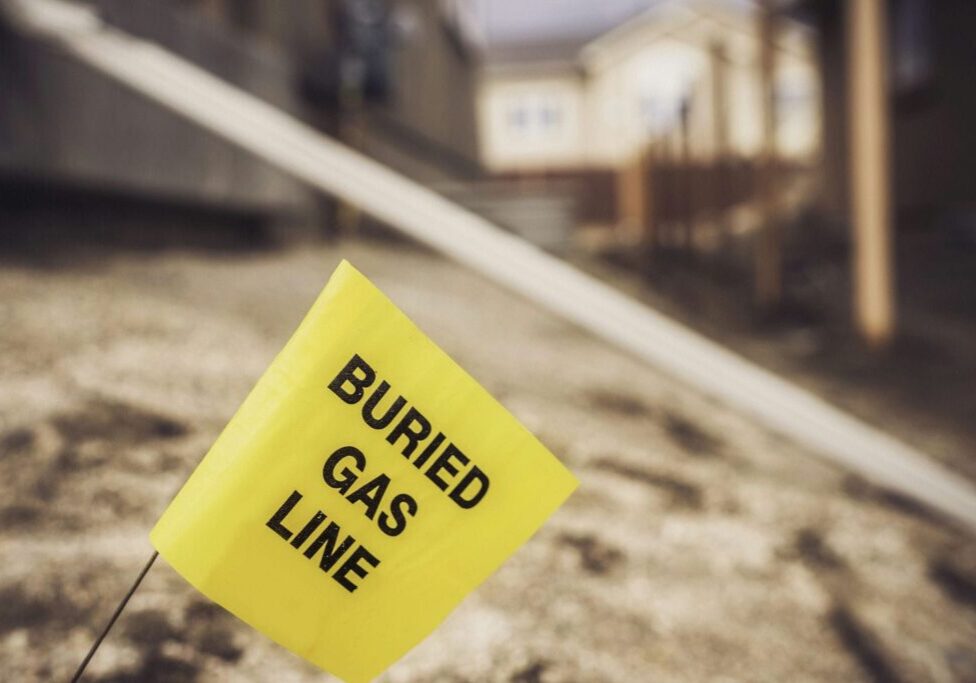
The Fast Answer On Utility Capacity Before You Build
Utility capacity means confirming that the lot’s available water, sewer, storm, electrical, gas, and telecom servicing can actually support the home you want to build, not just the home that used to sit there. That is why utility checks belong in custom home architectural design early, before basement depth, service room layout, and permit drawings are locked.
The common mistake is assuming “there’s already a house here, so the services must be fine.” In practice, a new custom home can change the demand profile, the service entry locations, the drainage assumptions, and the permit pathway. A larger house, a suite, EV charging, a heat pump, or a deeper basement can all make an old service arrangement inadequate.
Utility Capacity Checks At A Glance
A lot can have visible services and still have capacity problems once the new home is designed. The easiest way to avoid confusion is to separate each utility by what you need to verify, what usually surprises homeowners, and who normally confirms it.
| Utility Type | What To Verify | Common Surprise | Who Usually Confirms |
| Water | Service location, size, pressure, meter requirements, replacement needs | Existing line exists, but not at the right size or condition for the new home | Municipality, design team, plumber/civil coordination |
| Sanitary Sewer | Connection location, depth, invert elevation, gravity feasibility | Basement depth or fixture layout forces pumping or service changes | Municipality, civil/drainage input, design team |
| Storm | Available connection, sump needs, drainage route, site elevation constraints | Site drains poorly or needs more storm coordination than expected | Municipality, grading/civil input, design team |
| Electrical | Existing service size, upgrade path, transformer/pole/underground constraints, future load | Old service is not enough for all-electric loads, EVs, or suites | Utility/provider, electrician, design team |
| Gas | Service location, routing conflicts, future demand | Gas line conflicts with new sewer/water routing or frontage work | Provider, contractor, design team |
| Telecom | Entry point, conduit path, excavation coordination | Conduit route is missed until after hardscape or retaining is complete | Provider, electrician/low-voltage coordination, builder |
What matters most is not just whether each utility exists. It is whether each utility works with the house you are actually proposing, the grades you are actually planning, and the permit process in the municipality where you are building.
What “Utility Capacity” Actually Means On A Custom Home Lot
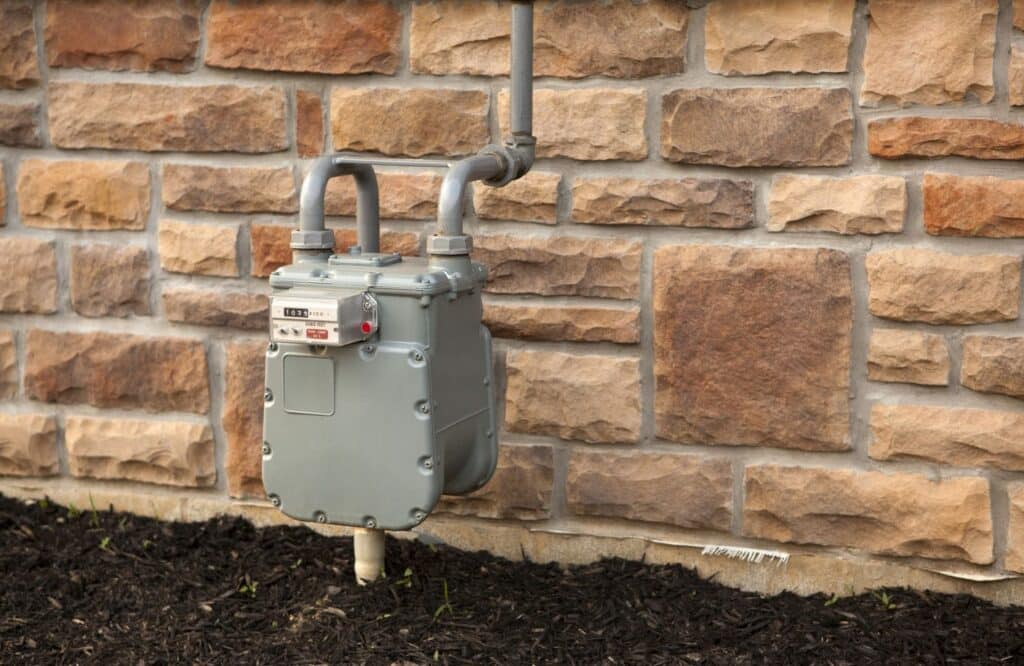
Homeowners often hear “capacity” and think only of service size. In reality, capacity is broader. It includes where the service enters the site, whether the elevations work, whether upgrades are needed, and whether the municipality requires a separate servicing process before the main building permit can move forward.
That is why utility capacity is both a technical question and a coordination question. A lot can have enough infrastructure in theory, but still require redesign because the routing, grade, or permit pathway does not match the new house.
Existing Service Does Not Mean Enough Service
A previous house proves only that the lot had some level of servicing at some point. It does not prove that the same servicing will support a larger custom home, a suite, an all-electric mechanical system, or EV charging.
This is especially important on teardown lots. Older homes often reflect older patterns of demand, older service materials, and older site layouts. The new house may have a different footprint, deeper foundation, different service room location, and a very different electrical and plumbing load profile.
When you check utility capacity early, you are really asking whether the existing lot servicing still works for the future house, not whether the old house had utilities.
Capacity Is More Than Pipe Size Or Panel Size
Capacity includes location, elevation, frontage constraints, and the path to a workable connection. For water, that can mean service size, pressure, and meter requirements. For sewer and storm, it can mean invert elevation, depth at the property line, and whether the lot can drain by gravity. For electrical and gas, it can mean where the service can enter and whether the route conflicts with other infrastructure.
That is why these questions are hard to answer from memory or from a rough sketch. Utility capacity sits at the intersection of site conditions, house program, and municipal process.
A well-coordinated check looks at all three. It does not isolate utilities as a late-stage trade problem.
Utility Problems Usually Show Up As Cost, Delay, Or Design Change
Utility problems usually appear in one of three ways. First, you discover a service upgrade cost you did not budget for. Second, you hit a permit or connection timing issue because a separate application is required. Third, you find out the house layout or site grading needs to change.
The earlier you identify utility constraints, the cheaper they are to solve. A moved service room on paper is manageable. A changed service entry after drawings are coordinated and pricing is done is much harder.
That is why utility capacity belongs in pre-design and early design conversations, not only at permit intake.
Start With The Right Documents Before You Ask About Capacity
The fastest way to get vague answers from a municipality or utility provider is to ask a vague question. “Does this lot have enough service?” is not specific enough. You need a current picture of the lot and a realistic brief for the home.
Without that context, utility conversations drift. One person is thinking about the old house, another is thinking about a future all-electric build, and nobody is working from the same assumptions.
Survey, Site Plan, And Grading Context First
Before you ask about utility capacity, you need to understand the lot geometry, the frontage, the grade, and how the proposed house is likely to sit on the site. That is why a current survey, a site plan direction, and basic grading context matter before you start locking in servicing assumptions.
A site survey, site plan, and grading plan each contribute different inputs to utility conversations, and understanding how they differ helps you sequence them in the right order.
Utility questions become much easier once you know the actual frontage conditions, the proposed building location, and the finished-grade direction. Until then, you are often just guessing at where services will need to go.
Write Down The House Program Before You Ask For Utility Answers
You also need a simple demand brief. That means the size of the home, whether you are adding a suite, whether the house is all-electric, whether you want EV charging, whether there is a pool or spa, and whether there are unusual plumbing or irrigation loads.
This matters because utilities are checked against the house you are proposing, not the house you vaguely imagine. A modest custom home with gas heat and no suite raises different questions than a larger all-electric home with EV charging, a legal suite, and future solar planning.
The more specific your house program is, the more useful the answers from the City and your consultants will be.
Walk The Frontage And Look For Clues
A frontage walk is simple and surprisingly useful. Look for water meters, manholes, catch basins, hydrants, overhead wires, utility poles, lane-served conditions, retaining walls, and steep driveway approaches. These clues often tell you where conflicts or constraints will show up first.
It also helps to document what the street or lane looks like relative to the lot. A steep drop, a narrow frontage, or a crowded utility corridor can change how easy or expensive service upgrades become.
A structured site analysis checklist helps capture those frontage clues before drawings get too detailed and design decisions become harder to adjust.
Water, Sanitary, And Storm: The Municipal Side Of Utility Capacity
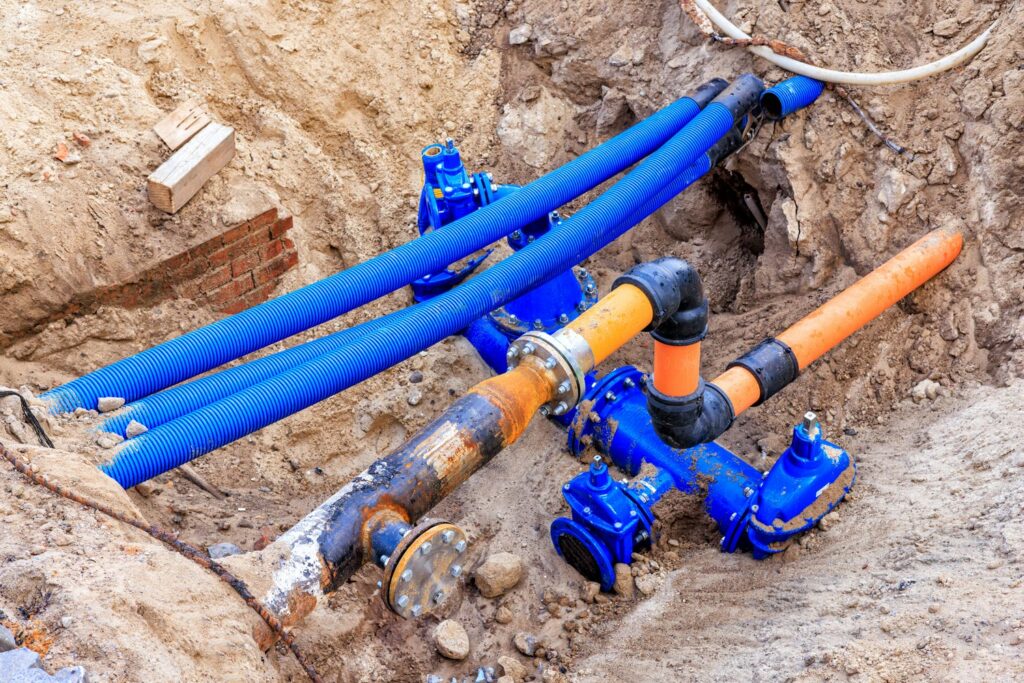
Water, sanitary, and storm are often where utility capacity becomes most “municipal.” These services are tied to public infrastructure, local engineering expectations, and permit sequencing, so they can affect the project even before the main house permit is submitted.
They also respond directly to grade and basement design. That means the same lot can be easy to service for one concept and much more complicated for another.
Water Capacity Means More Than “There Is A Water Line”
Water capacity is not only about whether a water line exists in the street. You also want to understand service location, expected service size, pressure considerations, and whether the existing service will remain or need replacement as part of the new build.
This becomes more important on older lots and on homes with larger domestic demand, future irrigation, or fire-related servicing considerations if applicable. A working water service for an old bungalow may not align neatly with a larger modern custom home.
It is also a layout issue. The location of the water entry can influence where your service room makes the most sense and how far internal distribution has to travel.
Sanitary And Storm Capacity Depend On Elevation, Not Just Proximity
Sanitary and storm questions are often really grade questions. The key issue is not just whether a connection exists nearby, but whether the connection depth and invert elevation work with the basement depth and finished grades you are proposing.
That matters because gravity drainage can be limited by the relationship between the municipal main and the house you are designing. A deeper basement can introduce pumping, sump, or alternate drainage implications that were not obvious when you first looked at the lot.
Coquitlam’s storm, sanitary, and water services brochure for home construction makes the point practically: if you are considering a lower basement, the first step is to determine the depth of the existing gravity services, and the City notes that lowering those services may or may not be feasible depending on main depths and other utilities.
What Cities Often Want Early
Vancouver is a good example of why utility checks cannot be left to the end. The City’s residential sewer and water connection permit process requires low-density applicants to apply for the connection permit before the combined development and building permit, and the application itself requires a legal survey plan and an existing gas service sketch from BC One Call.
That is the kind of requirement that changes schedule expectations. If your team assumes servicing can be figured out after the main permit package is ready, you can lose time at intake.
It is also why surveying and frontage research belong in early due diligence. Without those inputs, the servicing application itself can stall.
Why Older Services And Existing Conditions Matter
Older lots often carry hidden servicing uncertainty. Coquitlam’s utility services guidance for home construction and demolition notes that building or tearing down a home can temporarily or permanently affect storm, sanitary, and water connections, and flags the age and condition of existing services, locating those services, and temporary or permanent capping as common triggers.
For homeowners, that means an old service is not automatically an acceptable service. Age, material, exact location, and how the new house interacts with the frontage all matter.
That is why older neighbourhood lots deserve more servicing attention early, especially when the project is a teardown and rebuild.
Electrical, Gas, And Telecom: The Demand Side Of Capacity
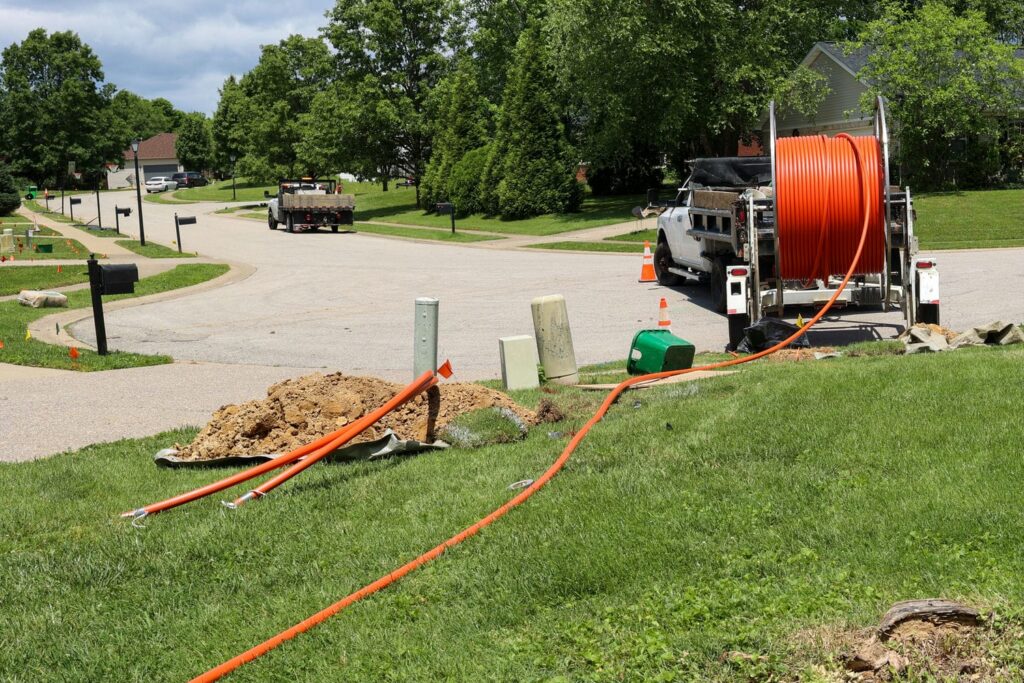
Electrical, gas, and telecom capacity are often treated as secondary questions until late in design. In practice, they can change service-room planning, frontage coordination, trenching, and even whether the home’s future-ready features are realistic without upgrades.
The more electrified the home becomes, the more important it is to think about electrical capacity as a design input, not just an electrician problem.
Electrical Capacity Depends On The House You Are Actually Building
Electrical planning changes quickly once you move from a conventional house brief to a future-focused one. Heat pumps, induction cooking, EV charging, secondary suites, and other electric loads can change the main service conversation significantly.
The key is to check demand against the proposed home, not against the existing service alone. A lot that once supported a smaller gas-heated home may need a different electrical strategy for a larger custom home with more electrified systems.
This is where homeowners get into trouble by assuming “we can add that later.” In many cases, later means costlier and more disruptive.
Step Code And Electrification Can Shift Your Utility Plan
Higher-performing homes often move toward more electrified systems, and that can change what “adequate service” means. A tighter home with a heat pump, EV charging, and more electric appliances puts a different kind of pressure on the electrical plan than an older mixed-fuel house.
Performance targets under the BC Energy Step Code for custom homes reshape the utility and systems conversation, since higher steps often push projects toward electrification and higher electrical demand.
The main takeaway is that energy strategy and utility capacity should be coordinated together. They are not separate design conversations.
Gas And Telecom Still Need A Route, Not Just A Provider
Gas and telecom questions often look simple because homeowners assume the provider will “handle it.” What still needs planning, though, is route, frontage conflict, service entry location, and coordination with excavation and hardscape.
This is especially important on lots with retaining, tight frontage conditions, or underground servicing expectations. Even if the demand is straightforward, the route can be the real constraint.
The same applies to telecom conduit. If it is not coordinated during excavation and frontage work, it often gets missed until after hardscape or retaining is already complete.
Utility Conflicts Often Happen At The Frontage
Frontage conflicts are where utility coordination becomes real. Vancouver’s low-density submission checklist is a useful example because its site plan requirements call for public water, storm, and sanitary services with sizes and dimensions to the property line, storm sump location, storm and sanitary invert elevations, water pressures, and gas location, and the same checklist includes a BC Hydro Infrastructure Checklist in the submission package.
That is a good reminder that frontage conditions are not someone else’s problem. They are part of what makes a site easy or difficult to service, and they should be visible on the drawings before permit submission.
Red Flags That Should Push Utility Checks Earlier
Some lots deserve early utility checks because the risk of upgrade, reroute, or permit delay is simply higher. The goal is not to over-invest in due diligence. It is to recognise when assumptions are likely to break.
If your lot triggers several of the conditions below, treat utility capacity as an early design input rather than a late permit task.
Older Neighbourhood Lot, Demolition Build, Or Unknown Service Age
Teardown lots are one of the biggest triggers for early utility review. The existing house may have outdated service lines, uncertain routing, or conditions hidden by the structure that only become visible once demolition or new design work begins.
That does not mean every older lot is a problem. It does mean you should be cautious about assuming the current services are usable, adequately sized, or in the best location for the new house.
The closer the project is to a “start fresh” rebuild, the more useful it is to think of servicing as part of site feasibility, not just a downstream trade issue.
Slope, Long Frontage, Lane Access, Or Tight Street Conditions
Frontage and grade can complicate almost every utility conversation. A long service run, steep frontage, lane-served lot, or narrow urban street can change how easily a new connection can be made and where the service entry wants to land.
On sloped sites, sewer and storm can become elevation-driven. On lane lots, routing and access assumptions can change. On tight frontages, poles, hydrants, retaining walls, and existing utility congestion can make otherwise simple work more complex.
These are exactly the kinds of lot conditions that reward early coordination between design, surveying, and servicing questions.
Larger Home Program Or “Future-Proof” Features
The more ambitious the house program, the more important it is to check utilities against the future build, not the existing condition. Triggers include all-electric design, EV charging, suites or secondary dwellings, pools, spas, irrigation, and other higher-demand systems.
Even when each item seems modest on its own, they add up. That is why it helps to write the full program down before you ask whether the lot “has enough capacity.”
Utility capacity is not only a function of the lot. It is also a function of the house brief.
Municipality-Specific Utility Conditions
Requirements also vary by city. Coquitlam’s water supply and metering policy now requires water meters with all building permit applications submitted after January 1, 2025 for new residential properties, including single-family and multi-family homes, under a December 2024 amendment to the Water Distribution Bylaw.
That kind of municipality-specific condition may not change the whole design, but it can affect budget, permit readiness, and the details that need to be shown on plans. It is another reason to confirm local servicing expectations early instead of assuming one city’s process matches another’s.
When To Check Utility Capacity In The Custom Home Process
The best timing is earlier than many homeowners expect. If utility capacity is first checked after the floor plan, basement strategy, and permit drawings are all fixed, you have already lost some of your best options.
Utility capacity checks work best when they inform the design, not when they arrive as intake comments after submission.
Before You Buy The Lot, If The Site Is Unusual
On unusual lots, utility due diligence can be part of purchase due diligence. This is especially true for sloped sites, teardown lots in older neighbourhoods, lots with lane servicing, or lots where deep basements and ambitious programs are part of the plan.
You do not need a full civil design before buying. But you do want enough servicing clarity to avoid discovering a major constraint only after you own the property.
That kind of early check can change your budget assumptions and, in some cases, your decision to move forward at all.
Before You Lock Basement Depth, Finished Grades, And Service Entry Locations
This is the most important timing window for many projects. Utility constraints can directly affect whether a deep basement is practical, whether storm drainage will need pumping or a sump, and where the service room and main entries make the most sense.
Once those decisions are locked, service conflicts become harder to solve. A revised service entry can affect the plan. A revised basement depth can affect structure, stairs, and exterior grades.
That is why servicing belongs in early design coordination, not just in permit administration.
Before Permit Submission, But Not For The First Time
By permit stage, utility assumptions should be documented, not discovered. That does not mean everything is fully resolved in concept design, but it does mean the major servicing direction should already be known.
If the first serious utility review happens at permit intake, the result is often a time penalty. The City asks for more information, the team scrambles to revise, and the schedule absorbs work that could have been done earlier.
The cleaner path is simple: check capacity early, document it clearly, then let permit submission confirm the planned approach.
What Municipalities And Permit Reviewers Usually Care About

Permit reviewers usually care about clarity, not just intent. They want to see how the proposed home connects to public services, whether the grade relationships make sense, and whether the site plan and servicing information are coordinated enough to support review.
That is why utility capacity often shows up across multiple parts of the permit package, not just in one note on one drawing.
What Should Appear On The Site Plan Or Servicing Information
At a practical level, site and servicing information often needs to show service locations, relevant sizes to the property line, invert elevations where storm and sanitary are involved, water pressure or pressure-related notes where requested, and any utility conflicts that affect the proposed house.
The exact requirements vary by municipality and by site complexity, but the pattern is consistent: reviewers want enough information to understand whether the lot can support the proposal without unresolved servicing conflicts.
If those items are vague or missing, the comments usually come back to the site plan and related servicing information first.
Vancouver Example: Utility Checks Before The Main House Permit
Vancouver’s February 2026 low-density submission requirements for single detached and duplex homes make the sequencing explicit: a Sewer/Water application is a prerequisite for the Development/Building application, and the main application will not be accepted if the Sewer/Water application has not been submitted.
That is a strong reminder that utility capacity is not a background detail. In some municipalities, it is directly tied to whether the main application can even enter review.
How This Fits Into The Broader Permit Drawing Set
Utility capacity affects more than servicing notes. It can change site plan content, basement design assumptions, service room location, grade decisions, and separate supporting submissions where required.
Site and servicing information sit inside the broader Vancouver building permit drawing set, and understanding how those drawings relate to each other keeps utility items from being missed.
The more coordinated the permit set is, the less likely it is that utility issues will trigger avoidable review cycles.
Common Utility Capacity Mistakes That Cause Delays
Most utility-related delays come from assumptions that go unchallenged too long. They are rarely dramatic. More often, they are quiet coordination misses that pile up until the permit reviewer or contractor points them out.
Catching these early is one of the simplest ways to protect design time and construction budget.
Assuming The Existing House Proves The Services Are Fine
This is the most common mistake on teardown lots. The old house proves there were services, not that those services are adequate, well located, or in acceptable condition for the new build.
A custom home may demand more from the lot in almost every direction: more electrical load, different drainage assumptions, larger footprint, deeper basement, or a different frontage strategy.
Treating the existing house as proof of utility adequacy usually delays the moment you find out what really needs to change.
Checking Water And Sewer But Forgetting Electrical Demand
Water and sewer often get attention first because they are visibly tied to municipal review. Electrical, however, can become just as important once the home program includes heat pumps, EV charging, suites, or future-ready all-electric systems.
If you leave electrical until late, the plan can end up with a service room and infrastructure strategy that does not fit the actual demand. That is when “future-proofing” becomes expensive instead of smart.
Balanced utility review means checking both municipal services and demand-side loads early.
Leaving Utility Checks Until After The Floor Plan Is Fixed
By the time the floor plan is fixed, some of the easiest utility choices have already become difficult. Service room location, basement depth, exterior stair geometry, and even driveway alignment can all be influenced by utility constraints.
Late discoveries force late revisions. And late revisions rarely affect just one drawing. They spill into structure, grading, and permit coordination.
A better rule is this: utility capacity should inform the floor plan, not chase it.
Treating Frontage Conditions As Someone Else’s Problem
Frontage conditions often get overlooked because they sit “outside the house.” But service entries, curb conditions, poles, hydrants, lane access, and grade at the frontage can all influence cost and feasibility.
If the frontage is difficult, the project is difficult to service. That does not mean the lot is unbuildable. It means the design team should know that early and coordinate around it.
Ignoring frontage realities is one of the simplest ways to turn a manageable site into a frustrating one.
Utility Capacity Check Checklist Before You Build
A simple checklist keeps utility capacity from becoming a vague background topic. It also helps you and your team align on whether the lot needs only routine confirmation or a more serious servicing review before drawings go too far.
Use this list before you lock design decisions and again before permit submission.
The Planning Checklist
- Confirm whether the lot already has active water, sanitary, storm, electrical, gas, and telecom service
- Confirm which services are public to the property line and which are private on the lot
- Gather the current survey, site plan context, and available grade information
- Write down the real house program, including suites, EVs, heat pumps, and outdoor loads
- Confirm water service location, meter requirements, and whether the service needs replacement
- Confirm sanitary and storm connection locations, invert elevations, and drainage constraints
- Check whether slope, lane access, or retaining conditions complicate service routes
- Confirm whether existing services conflict with the proposed footprint or driveway
- Ask whether separate sewer, water, or servicing applications are required before the main permit
- Check whether utility-related items need to be shown on the site plan or related servicing drawings
- Flag likely upgrades or off-site work before pricing is locked
- Review everything before permit submission, not after intake comments come back
If you can answer these items clearly, you are much less likely to run into the classic “utility surprise” after the design feels finished.
How Versa Homes Helps You Check Utility Capacity
Utility checks are one of the easiest places to save a project from avoidable rework. When you confirm servicing early, you reduce the risk of redesign, permit timing surprises, and unexpected upgrade costs that show up after the house feels settled on paper.
At Versa Homes, we build those checks into the early planning conversation so the lot, the house program, and the permit pathway stay aligned. That work is supported by fixed-price contracts once scope is defined, a detailed build schedule with pre-booked trades, and a client portal with daily logs and progress photos so decisions stay visible and documented. If you are planning a new home in Greater Vancouver, our custom home architectural design team is the right place to start.
Frequently Asked Questions
What Does Utility Capacity Mean For A Custom Home Lot?
Utility capacity means whether the lot’s water, sewer, storm, electrical, gas, and telecom servicing can support the home you plan to build, not just the one that used to be there. It includes location, routing, depth, pressure, load, and upgrade path, not just whether a service exists.
When Should I Check Utility Capacity Before Building?
Check it before design is locked, and even earlier if the lot is sloped, older, lane-served, or a teardown. The right time is when utility constraints can still influence basement depth, service-room layout, and site planning.
Can I Assume An Existing House Means The Utilities Are Enough?
No. Existing service only proves that some level of servicing existed before. A new custom home can have very different demand, grading, routing, and permit requirements, which can make old services inadequate or poorly located.
What Documents Should I Gather Before I Ask About Utility Capacity?
Start with a current survey, basic site plan context, grade information, and a realistic house program. Without those, utility answers tend to stay generic and may not match the home you actually intend to build.
What Usually Triggers Utility Upgrades On A Custom Home?
Common triggers include all-electric design, EV charging, suites, deep basements, slope, long frontage, older service age, and municipal servicing requirements. The more complex the lot or the house program, the more likely an upgrade or reroute becomes.
Who Confirms Utility Capacity For Water, Sewer, Storm, Electrical, And Gas?
Municipal engineering or servicing review usually confirms water, sanitary, and storm questions. Electrical and gas are typically confirmed through provider and trade coordination, with the design team making sure those decisions fit the house layout and permit set.
What Should Show Up On Drawings Before Permit Submission?
Site and servicing information should clearly show service locations, relevant sizes or notes to the property line, invert elevations where needed, water or drainage notes where requested, and any utility conflicts that affect the proposed building.
Do Utility Requirements Differ By Municipality?
Yes. Municipalities can differ on prerequisites, metering rules, servicing applications, and what must appear on the site plan. That is why local confirmation matters, even when the lot looks straightforward.


Felipe Freig
Founder of Versa Homes
Felipe Freig is the founder of Versa Homes, a Vancouver custom home builder known for architecturally driven, fixed-price projects. With years of hands-on site experience and deep permitting and by-law knowledge, Felipe leads high-performance teams that deliver precision craftsmanship, clear budgets, and on-schedule luxury homes.
You May Also Like...

High-Performance Wall Assemblies For Step Code 4–5
Bearing the Weight: The Crucial Role of Foundation Walls in Your Home

What Are the Steps Involved in Building a Custom Home From Start to Finish?

What Should a Builder Charge to Build a Custom Home

Thermal Bridging Details For Custom Homes: What Your Drawings Must Show



What’s Public and What Isn’t: Your Custom Home in B.C. Permit Records

How To Write A Clear Design Brief For Your Custom Home