
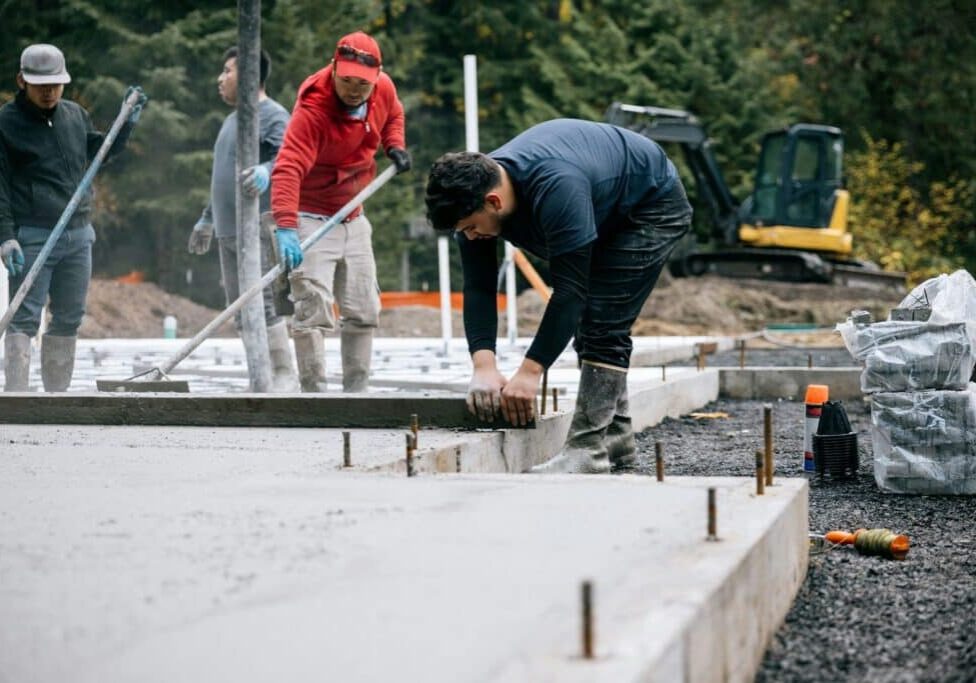
Foundation pour day matters because concrete turns weeks of excavation, formwork, rebar, inspections, and layout decisions into something permanent. For custom homes in Coquitlam, one well-planned pour day sets the elevations, dimensions, structure, and schedule path for the rest of the build.
A foundation pour is not “just concrete day.” It is the point where the survey, excavation, formwork, reinforcing, embeds, inspection status, concrete order, weather window, pump truck access, and site crew all have to line up. When they do, the project moves cleanly into waterproofing, drainage, backfill, slab prep, and framing. When they do not, a small miss can create days or weeks of rework.
Foundation Pour Day: the scheduled concrete placement day when footing, wall, or slab preparation becomes a permanent structural element after forms, reinforcement, embeds, inspections, logistics, and weather planning are aligned.
Foundation Pour Day At A Glance
Foundation pour day looks fast from the outside because the concrete trucks arrive, the pump starts, and the site suddenly feels busy. In reality, the day works only because many checks happened before the first load of concrete reached the street.
This timeline gives you the shape of the day. Some projects separate footing, foundation wall, and slab pours into different dates, so the exact sequence changes. The coordination mindset stays the same.
| Time / Stage | What Happens | Why It Matters | What Can Delay It |
| Days Before: Inspection And Readiness Checks | Confirm forms, excavation, survey, rebar, embeds, drainage-related prep, and inspection timing | Prevents concrete from covering work that still needs review | Missed inspection, missing embed, unclear survey, rain risk |
| Early Morning: Site Opens And Crew Aligns | Crew meeting, access check, pump/truck staging, weather review | Keeps the day moving once concrete is dispatched | Blocked access, weather shift, missing trade, neighbour constraints |
| Pre-Pour: Final Form And Rebar Review | Confirm dimensions, levels, reinforcement, anchor bolts, sleeves, and penetrations | Catches small misses before they become permanent | Discovered mismatch or missing component |
| Pour Window: Concrete Arrives And Placement Begins | Pump or chute placement, consolidation, form monitoring | Turns preparation into the permanent foundation | Truck timing, pump issue, concrete concern, sudden weather change |
| Finishing And Initial Protection | Finish surfaces as needed, protect concrete, document the day | Supports quality control and the next sequence | Finish timing, rain protection, curing concerns |
| After The Pour: Handoff To Next Phase | Curing, form stripping timing, survey/quality checks, prep for next foundation step or framing | Keeps waterproofing, drainage, backfill, slab, and framing on track | Repair work, out-of-tolerance condition, incomplete documentation |
Before Tuesday: The Pour Started Long Before The Truck Arrives

The foundation pour begins long before pour day. The site has to be excavated, formed, reinforced, checked, inspected, and made accessible before concrete is ordered. The truck arriving is not the start of the work. It is the moment everything gets tested.
In Coquitlam, that preparation often has local realities behind it: rain windows, sloped lots, tight streets, lane access, excavation constraints, and neighbour-facing logistics. A flat open site and a steep, tight site do not create the same pour-day pressure.
The Site Has To Be Ready Before Concrete Is Ordered
Site readiness includes excavation shape, base conditions, formwork, rebar, sleeves, anchor locations, access for the pump, safe staging for trucks, and a weather plan. It also includes the less visible work: scheduling inspections, confirming responsibilities, and making sure drawings and site conditions still match.
A strong builder does not order concrete and hope the day works. The team works backward from the pour window and asks what must be complete before the truck arrives. That means checking the foundation layout, confirming embeds, reviewing access, and knowing who is responsible for each step.
On a sloped Coquitlam lot, this planning can be even more important. Grade changes, retaining areas, and limited staging can make concrete logistics harder, especially when the site has little room for equipment and crew movement.
Inspection Timing Is A Schedule Gate
Inspection timing is one of the biggest gates before concrete. Coquitlam’s building and plumbing inspection process covers forms and excavation, drain tile and damp proofing, slab poly, and storm, sanitary, and water services, and inspections need to be scheduled before 4:15 p.m. the day before.
For foundations specifically, the city’s guide to inspections required before concealing any works lists footing forms and foundation wall forms / survey as inspections that must happen before pouring concrete, and it warns that work concealed too early may need to be exposed at the owner’s expense.
For homeowners, the lesson is simple: a pour cannot be treated like a flexible appointment. If the required inspection is missing, incomplete, or not passed, the pour may need to move. That can affect concrete delivery, pump truck availability, crew scheduling, and the weather window.
Geotech, Soil Conditions, And Excavation Assumptions Have To Align
The foundation pour also depends on whether the excavation and ground conditions match the assumptions behind the drawings. If the lot has slope, fill, groundwater, or tight neighbour conditions, those items should be understood before pour day. Concrete should not become the first time the team confronts a ground-condition surprise.
A geotechnical report for a custom home lot can shape foundation direction, excavation expectations, shoring, retaining, drainage, and groundwater planning, and it should be in hand before pour day on any sloped or complex site.
Good pre-pour coordination means the foundation design, excavation reality, and site conditions are telling the same story. If they are not, the builder should resolve the mismatch before concrete is placed.
6:30 AM: Site Access, Weather, And The Crew Briefing

The morning starts with logistics. Before concrete matters, access matters. The site has to receive the pump truck, concrete trucks, crew vehicles, and inspection follow-ups without turning the street into a problem.
This is where a quiet Coquitlam street can quickly become a construction bottleneck. Parked cars, grades, narrow lanes, tight corners, and staging limits all affect how smoothly the day begins.
The Day Starts With Access, Not Concrete
A pump truck needs a workable staging location. Concrete trucks need a route in and out. Crew members need safe movement around the site. Neighbours need reasonable access, and the site lead needs a clear plan if a delivery runs late or a vehicle blocks the path.
This sounds basic until you see what happens when it is missing. A truck waiting on the street can create pressure. A pump in the wrong spot can slow placement. A blocked lane can turn a planned sequence into a scramble.
A well-run pour starts with a simple question: can the site actually receive the day we planned?
Weather Windows Matter More Than Homeowners Expect
Weather shapes pour day in the Lower Mainland. Rain, cold, heat, wind, and sudden shifts can affect site protection, crew timing, access conditions, and finishing windows. The right response depends on the project and professional judgement, so homeowners should not treat weather planning as a DIY decision.
The builder is not choosing a convenient Tuesday. The team is choosing a coordinated window: inspection complete, crew available, pump and concrete booked, site ready, and weather manageable. That takes planning.
For Coquitlam lots with slope or tight access, weather can also affect ground conditions and safety. A wet site can make staging harder, and surface water needs to be managed before it becomes a problem around forms and excavation.
Coquitlam Construction Hours Shape The Workday
Concrete timing also has to fit Coquitlam’s construction noise rules, which permit construction noise from 7 a.m. to 8 p.m. Monday to Friday and 9 a.m. to 6 p.m. Saturday, with no construction noise for profit on Sundays or holidays.
This is why “just start earlier” or “just finish later” may not be realistic. Concrete delivery, pump setup, inspection timing, neighbour impact, crew scheduling, weather, and local rules all have to line up.
A good builder plans inside those constraints rather than trying to force the site into an impossible day.
8:00 AM: Forms, Rebar, Embeds, And Last-Look Checks
By 8:00 a.m., the site should not be guessing. The crew should know what is being poured, where the concrete is going, what has been inspected, and what still needs a final check before placement begins.
This is the last moment to catch small issues while they are still easy to fix. Once concrete is placed, those same issues can become drilling, patching, review, or rework.
Formwork Sets The Shape Of The Home
Formwork controls the shape of the foundation. It affects dimensions, wall alignment, footing geometry, wall heights, openings, and how the foundation meets the rest of the house. If the formwork is wrong, the mistake can carry forward into framing, stairs, exterior finishes, and waterproofing.
That is why formwork checks are not busywork. They protect the geometry of the home. A small foundation misalignment can become a framing complication, a finishing problem, or a detail that needs correction later.
The 18-month consequence starts here: the foundation becomes the reference point for almost every trade that follows.
Rebar, Anchor Bolts, Sleeves, And Penetrations Are Hard To Fix Later
Before concrete is placed, the team checks reinforcement, anchor bolts, hold-down locations, sleeves, service penetrations, and other embedded items. These are the pieces that must be in the right place before concrete makes the condition permanent.
A missing sleeve may affect plumbing or mechanical work. A missed anchor can affect framing connections. A misplaced penetration can create a waterproofing or layout issue. These problems may be fixable, but fixes take time and often require coordination with engineers or trades.
Homeowners do not need to know the size of each bar or bolt. They need to understand why the pre-pour checklist matters so much.
The Foundation Is The Load Path, Not Just A Basement Wall
The foundation receives the load of the home and transfers it to the ground. It also sets the platform for framing, exterior walls, waterproofing, drainage, and finished grades. It is not just a concrete wall around a basement.
The role of foundation walls in your home goes well beyond enclosing the basement, which is why we treat foundation geometry as the load path everything else hangs off of.
That is why foundation work carries so much schedule weight. When it is right, the next trades have a stable base. When it is wrong, everyone downstream feels it.
9:30 AM: The Concrete Arrives And The Clock Gets Real

When concrete arrives, the mood changes. The preparation phase becomes an active placement sequence, and the site needs to function without hesitation.
This is not the time to discover missing access, unclear responsibility, or a detail that was never resolved. The team needs the inspection status, formwork, reinforcement, pump setup, weather plan, and crew roles already aligned.
Concrete Timing Is A Coordination Problem
Concrete placement is time-sensitive. Once trucks are dispatched and the pump is ready, delays create pressure. A late discovery can affect the placement sequence, supplier timing, crew pacing, and protection strategy.
That is why pour day is a coordination problem before it is a concrete problem. The site lead needs to know who is watching forms, who is handling placement, who is checking delivery tickets, who is documenting, and who is managing communication.
Professional coordination makes the day look calmer than it is. That calm comes from planning, not luck.
Mix Specs Are Checked Against The Drawings And Order
The concrete order should match the project documents and the intended pour. The site team checks delivery tickets and confirms the material matches what was ordered before placement proceeds.
This is quality control at a practical level. The builder is confirming that what shows up on site aligns with the drawings, engineer requirements, and project specifications. It is not the homeowner’s job to interpret the technical details, but it is reasonable to expect the builder to document the day clearly.
Those records matter later if questions come up about what was placed, when it arrived, and how the work proceeded.
Pumping, Placement, And Consolidation Are Not A Free-For-All
Concrete placement follows a sequence. The crew needs to move material into the right areas, monitor the forms, and avoid creating weak spots or overloading a section. Placement is active work, not simply “filling the hole.”
The crew watches how the forms behave as concrete goes in. They also respond to changes in pace, weather, access, and site conditions. If something looks wrong, the response needs to be immediate.
This is where experience matters. The best pour days are controlled and methodical, even when the site feels busy.
Midday: Why One Small Miss Can Become A Big Schedule Problem

By midday, the work may be moving quickly, but the stakes are high. Small items that seem minor before concrete can affect multiple trades after concrete.
The foundation touches structure, waterproofing, plumbing, mechanical, drainage, framing, exterior finishes, and grading. That is why pour-day quality control has to be practical and repeatable.
Missed Embeds And Penetrations Can Affect Multiple Trades
A missing sleeve, anchor, hold-down, or service penetration can ripple through the build. A plumbing route may need a new path. A framing connection may need review. A mechanical penetration may require coring. A waterproofing detail may need extra attention.
Each fix can affect time, sequencing, and cost. It can also create frustration because the item might have been simple to confirm before concrete.
That is why photos, checklists, and pre-pour signoff matter. They reduce reliance on memory during a high-pressure day.
Form Movement Or Alignment Issues Can Carry Forward
If formwork moves or alignment is not monitored, the result can show up later as framing challenges, stair alignment issues, exterior wall complications, or finish adjustments. The foundation is not an isolated trade. It becomes the physical truth for the rest of the home.
The crew needs to watch the forms while placement happens. This is especially important on larger wall sections or more complex foundation layouts where the placement sequence creates pressure on the formwork.
A calm site lead knows that pour day is not finished until the placed concrete matches the intended foundation geometry.
Weather Protection Becomes A Real-Time Decision
Weather protection is planned before the day, then adjusted in real time. Rain, wind, surface water, temperature changes, and site drainage can all influence how the team protects the pour and manages the site.
In Coquitlam and the Lower Mainland, rain planning is not optional. A dry window can shift, and a site that looked manageable in the morning can need protection by afternoon.
Good builders plan for that possibility instead of treating weather as a surprise.
Afternoon: Finishing, Protection, And The First Post-Pour Checks
When the last truck leaves, the day is not over. The site still needs finishing, cleanup, protection, documentation, and a handoff into the next sequence.
This is where homeowners often misunderstand the milestone. Concrete placement is a major achievement, but the foundation still needs to be protected and prepared for the next stage.
The Pour Is Not Done When The Last Truck Leaves
After placement, the crew manages finishing where needed, protects key areas, cleans access points, checks the site, and confirms what happens next. The site lead should know the immediate post-pour priorities before the crew starts to leave.
This can include protection from rain, control of site water, marking concerns, and preparing for the next inspection or construction step. The specifics vary by pour type and project sequence.
A strong finish to the day prevents the site from drifting into uncertainty once the visible action stops.
Documentation Protects Everyone
Pour-day documentation may include photos, inspection status, concrete tickets, weather notes, site logs, and owner updates. These records help the builder explain what happened and support quality control if questions arise later.
Documentation also helps homeowners understand progress without needing to stand on a busy worksite. They can see what was poured, what was checked, and what the next steps are.
That transparency matters because foundation work is mostly hidden once the project moves forward. Good records preserve the story of what happened before it was covered.
The Next Phase Depends On What Was Built Today
After the pour, the project may move into curing, form stripping, waterproofing, drain tile, backfill, slab prep, or framing, depending on the foundation sequence. A clean pour helps those handoffs happen with fewer delays.
Once the foundation is set, the framing process in custom home construction becomes the next visible milestone, and the cleaner the foundation handoff, the smoother that transition tends to be.
Why This Tuesday Can Decide The Next 18 Months

Foundation pour day can feel like one calendar event. In reality, it sets conditions that affect the rest of the project. The walls, floors, stairs, waterproofing, exterior details, services, and framing all rely on the foundation being right.
That is why one Tuesday can shape the next 18 months. It locks in more than concrete. It locks in the physical starting point for the home.
The Foundation Locks In Geometry
Foundation geometry affects wall lines, floor systems, stair runs, garage openings, window relationships, waterproofing details, exterior cladding alignment, and framing layout. Once the foundation is placed, every trade downstream works from that reality.
A drawing can be revised quickly. A poured foundation cannot be revised casually. Fixes are possible, but they take more time, more coordination, and more cost than catching the issue before placement.
That is why the pre-pour review matters so much. It is the last affordable checkpoint before the project commits to a permanent base.
The Schedule Depends On Passing Cleanly Into The Next Phase
After the foundation, the schedule needs to move into waterproofing, services, backfill, slab, and framing without preventable rework. If the pour creates an issue, it can stall several trades at once.
A detailed build schedule is only useful when the high-risk milestones are prepared well. Foundation work is one of those milestones because it sits at the front of the critical path.
If the foundation sequence is clean, the project can keep momentum. If it is not, the team can spend valuable time correcting instead of building.
Quality Control Happens Before The Mistake Becomes Permanent
The best foundation quality control happens before concrete is placed. That means checking forms, embeds, inspections, concrete order, access, weather, and responsibilities before the pour window begins.
Once concrete is in, fixes become more invasive. They may require coring, patching, engineering review, waterproofing adjustments, or schedule changes. That is why good builders rely on preparation, not heroics.
Pour day is won by process before it is won by pace.
Common Foundation Pour Problems And How Good Builders Reduce Risk
Foundation pour issues are usually predictable. They come from missing inspections, poor access, weak weather planning, missed embeds, or loose communication.
A good builder does not eliminate every risk. A good builder reduces risk through planning, clear roles, documentation, and early decisions.
The Inspection Is Not Ready
If a required inspection is missing, incomplete, or not passed, the pour may need to be delayed. Footing forms and foundation wall forms / survey are inspections that must happen before pouring concrete, which makes inspection readiness a real schedule gate, not a casual step.
A delay can affect concrete scheduling, pump truck availability, crew timing, and weather windows. It can also create knock-on pressure for the next trades.
Good builders confirm inspection status before concrete is ordered and before the site commits to the pour day.
Access Or Staging Is Poorly Planned
Concrete trucks and pump equipment need a safe, workable access plan. Tight streets, narrow lanes, steep driveways, neighbour vehicles, and site congestion can all create friction on pour day.
Staging should be planned before the morning starts. That includes truck route, pump placement, crew parking, pedestrian safety, and any neighbour-facing access concerns.
A site that cannot receive the pour cleanly can quickly turn a technical task into a logistical problem.
Weather Protection Is An Afterthought
Weather protection should be part of the plan before pour day. Rain, wind, temperature swings, and site water can all affect how the team protects the work and manages timing.
The issue is not whether weather exists. In Coquitlam, it will. The issue is whether the team has a practical plan for the conditions likely to show up.
A builder who watches weather early can make better decisions about timing, protection, and site readiness.
Embeds, Sleeves, Or Anchor Locations Are Missed
Embeds and sleeves are easy to underestimate because they can look small before the pour. After the pour, a missed location can become an expensive coordination problem.
The solution is a repeatable checklist. The crew should confirm anchor bolts, hold-downs, service sleeves, penetrations, and key embedded items against the drawings before placement starts.
This is the kind of detail that rewards discipline. It is not dramatic, but it protects the schedule.
Communication Is Too Loose
Pour day needs clear communication between the site lead, crew, concrete supplier, pump operator, inspector, and owner communication channel. If responsibilities are vague, the site can lose time when a decision is needed.
Good communication does not mean everyone talks more. It means the right people know what they own and when they need to act.
A foundation pour is a team event. The team needs one coordinated plan.
How Versa Homes Plans Foundation Milestones In Coquitlam
A foundation pour goes well when the work is planned before the truck arrives. Versa Homes treats pour day as a critical milestone, not a calendar placeholder. We coordinate inspection timing, site readiness, trades, weather planning, documentation, and next-phase handoffs so the foundation supports the full build schedule.
That process is backed by a detailed build schedule with pre-booked trades, a client portal with daily logs and progress photos, and fixed-price contracts once scope is defined. If you are planning a new build and want a custom home builder in Coquitlam that treats foundation work as the start of long-term schedule control, start here.
Frequently Asked Questions
What Happens During A Foundation Pour For A Custom Home?
During a foundation pour, the crew places concrete into inspected forms for footings, foundation walls, or slabs while monitoring formwork, reinforcement, embeds, concrete timing, site access, and weather protection. The exact sequence depends on whether the project is pouring footings, walls, slabs, or another foundation element, and some projects use multiple pour days.
Why Is Foundation Pour Day So Important?
Foundation pour day locks in elevations, dimensions, anchor locations, and structural alignment, all of which affect waterproofing, framing, stairs, finishes, and the full build schedule. A clean pour supports a cleaner handoff into the next phase, while a problem can delay several trades and create schedule pressure later.
What Inspections Are Needed Before A Foundation Pour In Coquitlam?
Footing forms and foundation wall forms / survey are listed as inspections required before pouring concrete, and your builder should confirm inspection status before concrete is ordered and the pour day is locked. The exact inspection path should be confirmed for the specific permit and project scope.
Can You Pour Concrete In The Rain In Coquitlam?
It depends on the conditions, the project, the protection measures in place, and the team’s judgement, so rain is a planning issue rather than a simple yes-or-no rule. A good builder watches the weather window, plans site protection, and makes the call based on safety, quality, and sequence.
What Can Delay A Foundation Pour?
Common delays include missing inspections, incomplete formwork or rebar, missing embeds, access conflicts, pump or truck issues, weather changes, and unresolved drawing or site questions, which is why we confirm readiness before the day starts rather than while concrete is already on route.
What Happens After The Foundation Pour?
After the pour, the team protects and monitors the concrete, completes post-pour checks, and prepares for the next sequence, which may include curing, form stripping, waterproofing, drain tile, backfill, slab work, or framing depending on the project. The next phase depends on the foundation being clean, documented, and ready for handoff.
Does A Foundation Pour Affect The Move-In Timeline?
Yes. A clean pour helps the schedule move into later phases without rework, while a problem can delay waterproofing, backfill, slab work, framing, and other trades, which is why foundation pour day is treated as a critical milestone in the build schedule.

Felipe Freig
Founder of Versa Homes
Felipe Freig is the founder of Versa Homes, a Vancouver custom home builder known for architecturally driven, fixed-price projects. With years of hands-on site experience and deep permitting and by-law knowledge, Felipe leads high-performance teams that deliver precision craftsmanship, clear budgets, and on-schedule luxury homes.
You May Also Like...


How to Choose the Perfect Floor Plan for Your Family

Driveway Gate Design for a Custom Home: Entry Control From the Street In

The Final Touches: Explore Exquisite Finishing Details for Your Custom Home

Elevating Your Basement: Creative Renovation Ideas for a Custom Home or Luxury Estate
Building Bonds: Tips for Crafting a Multi-Generational Custom Home

Crafting the Foundation: Navigating the Framing Process in Custom Home Construction

Best Places to Build a Custom Home in Greater Vancouver

What is the difference between cost plus and fixed price?