
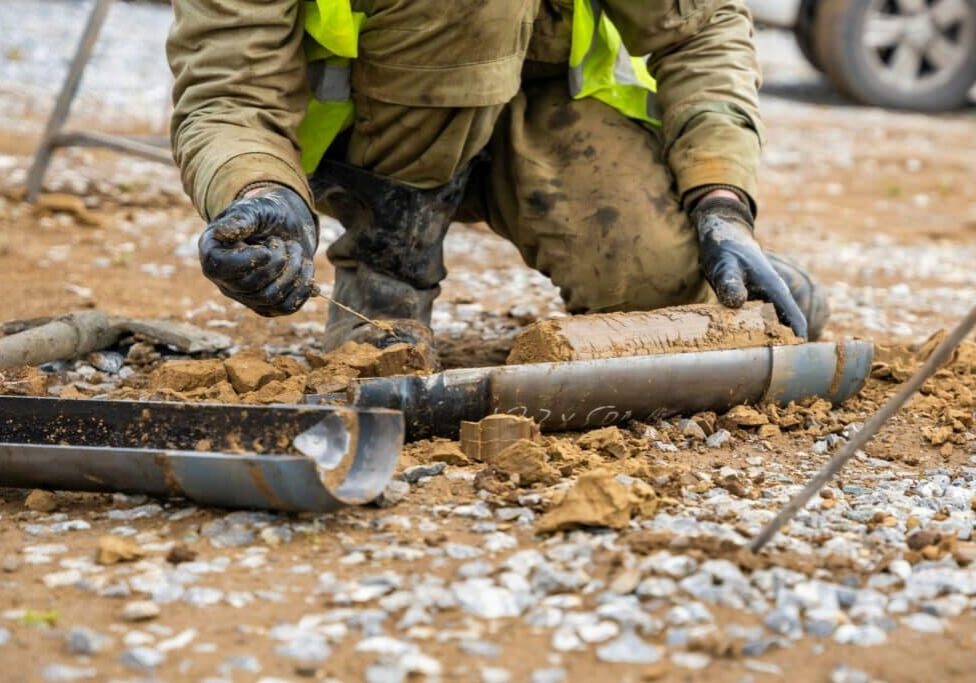
The Fast Answer On When You Need A Geotechnical Report
You typically need a geotechnical report when your lot has risk factors such as slope instability, floodplain concerns, unknown fill, deep excavation, or tight neighbour constraints, or when your municipality flags the property and requires it for permitting. Even when it isn’t strictly required, geotech is often the fastest way to reduce uncertainty before you lock basement depth, foundation concept, and grading as part of your custom home architectural design process.
Most homeowners run into geotech at one of two moments: before buying a lot (due diligence) or right before permits (because the City asks for it). The easiest path is to treat geotech as a planning tool. If you order it at the right time, it can prevent late redesign, unexpected shoring scope, and “we can’t dig that deep here” surprises.
What A Geotechnical Report Is And What It Is Not

A geotechnical report is a site-specific assessment of soil and groundwater conditions that provides recommendations to guide foundation, excavation, shoring, and drainage decisions. It reduces unknowns so your designer, structural engineer, and builder can plan realistically.
A lot can look straightforward from the street and still hold expensive surprises below grade. Geotechnical reporting exists to bring those risks into the open early, while changes are still easy to make on paper.
Think of geotech as “ground truth” for everything below and around the foundation. It helps your team decide what is feasible, what needs special handling, and what should be budgeted as real scope.
What A Geotechnical Report Actually Does
A geotechnical report describes what your lot is likely to do when you dig, load it with a building, and move water around it. It is based on site investigation (often boreholes or test pits) and professional interpretation of the conditions found.
For a custom home, the value is decision-making. Geotech can influence whether a deep basement is practical, whether shoring is likely, how you manage groundwater, and how you coordinate grading and drainage. It can also help your structural engineer design to real site conditions rather than conservative assumptions.
It is also a risk tool. On lots with slope, fill, or tight neighbours, geotech can clarify where the biggest unknowns are, so you can plan the right scope and avoid “mid-project discovery” costs.
What It Typically Includes On A Custom Home Lot
Most custom home geotechnical reports include a summary of subsurface conditions and recommendations tied to construction realities. While every site is different, you can usually expect the report to address foundations and excavation at a practical level. Common elements include:
- A description of soils encountered and their general behaviour
- Notes on groundwater observations at the time of investigation (if encountered)
- Recommendations that inform foundation approach at a high level
- Guidance on excavation and whether shoring may be required
- Considerations for drainage around the structure
- Notes on construction monitoring expectations when risks are higher
If your project has special conditions like steep slopes, deep excavation, or neighbouring structures close to the dig, the report scope often expands to match that risk.
What It Does Not Replace
A geotechnical report is not a legal survey, a site plan, or a full grading design. It also does not replace structural engineering. It informs these disciplines, but it does not do their job.
This is a common mix-up: a homeowner assumes geotech “covers drainage” or “covers the retaining wall.” In reality, geotech provides recommendations, while grading plans and structural drawings turn those recommendations into buildable designs.
If you treat geotech as a substitute for coordinated drawings, you can still end up with gaps. The best results come when geotech is ordered early enough to shape the design set, not after it is already final.
When Geotech Is Typically Required Versus Recommended
Requirements vary by municipality and by site flags, so you should confirm what your City expects for your specific lot. Still, certain conditions show up again and again in Greater Vancouver, and they tend to predict when geotech is required or strongly recommended.
The triggers below separate conditions that often force a permit-stage requirement from those that simply make early due diligence the smarter move.
Required Versus Recommended Triggers At A Glance
| Trigger Or Condition | Why It Matters | Typical Outcome | Early Decision It Affects |
| Steep Slope Or Stepped Lot | Higher instability and drainage complexity | Often required or strongly recommended | Foundation concept, shoring risk, finished grades |
| Floodplain Or Slope Instability Flag | Municipality may require documentation | Often required for permit acceptance | Permit readiness, foundation and drainage planning |
| Deep Basement Or Deep Excavation | Greater risk of shoring, groundwater, and neighbour impacts | Often required on complex sites | Basement depth, excavation method, schedule risk |
| Unknown Fill Or Suspected Poor Soils | Variable behaviour and settlement risk | Often recommended | Foundation approach, budgeting for ground improvement |
| Excavation Close To Neighbours | Risk of movement and legal exposure | Often required on tight lots | Shoring, sequencing, monitoring expectations |
| Existing Retaining Walls Or Major Grade Change | Indicates load and drainage complexity | Often recommended | Retaining scope, grading plan, drainage routing |
If you see multiple triggers in the same project, ordering geotech earlier usually saves time. It can also prevent a “design locked, then rework” cycle.
Red Flags On A Lot That Suggest You Should Order Geotech Early
If you are deciding whether to order geotech now, focus on conditions that make below-grade work uncertain. These are the situations where a report can change your design direction, not just confirm what you already assumed.
The patterns below help you recognise when a lot is “simple enough” versus when it deserves early ground investigation.
Slope And Stepped Site Conditions
Slope is one of the biggest predictors of geotech value. When the site is stepped or steep, you are no longer designing just a house. You are designing a house plus excavation strategy, drainage strategy, and often retaining strategy.
In Greater Vancouver, slope-driven complexity shows up often in areas with elevation changes and hillside lots, including parts of Burnaby, Coquitlam, and Anmore. Even if the lot feels stable, the moment you excavate, the ground behaviour can become a project driver.
A structured custom home site analysis checklist helps frame slope, exposure, and constraint questions before the design is locked.
Signs Of Fill, Poor Drainage, Or Past Site Movement
Fill and drainage issues are not always obvious, but there are clues. Standing water after rain, soft ground that stays wet, uneven settlement in patios, or cracked and leaning retaining walls can all suggest that the lot has a story below grade.
Past site movement can be subtle. You might see recurring fence repairs, slumping edges, or signs that one portion of the yard behaves differently than another. These are not guarantees of a problem, but they are signals that “standard assumptions” may be risky.
If your lot has these signs, geotech can help you avoid building a foundation plan on optimism. It can also help you budget for the real scope, not the best-case scope.
Ravines, Creeks, Shoreline Proximity, And Tight Neighbour Conditions
Edges create complexity. Lots near ravines, creeks, or sensitive drainage paths often have higher scrutiny and higher design consequences if water is mismanaged. The same is true when you are close to neighbouring structures and your excavation could impact adjacent soils.
Tight side yards matter because excavation does not happen in a vacuum. Access is limited, equipment choices narrow, and shoring needs become more likely if you are digging close to a property line or a neighbour’s foundation.
In these situations, geotech helps your team plan a safer excavation strategy and reduces the chance of late scope discovery that affects both cost and schedule.
Ambitious Basement Depth Or Major Excavation Plans
Deep basements are a common trigger for geotech, even on lots that look flat. The deeper you dig, the more you risk running into groundwater, unstable soils, or the need for shoring to protect adjacent ground and structures.
A useful comparison is the neighbourhood pattern. If surrounding homes are shallow, slab-on-grade, or have limited basements, and you are planning something significantly deeper, you are increasing uncertainty. That does not mean you cannot do it. It means you should expect more investigation and more documentation.
Ordering geotech early in these cases helps you decide “how deep is realistic” before you commit to a layout that depends on a deep basement.
How A Geotechnical Report Changes Design And Budget

Geotech is most valuable when it changes a decision. If it arrives after the design is final, it tends to feel like an extra cost. If it arrives early, it can prevent expensive redesign and surprise scope.
Homeowners often think geotech only affects the foundation. In practice, it can also affect grading, retaining, waterproofing planning, and the excavation strategy that drives a large portion of early construction cost.
Foundation Direction Before You Finalise The Structural Concept
A geotechnical report can influence the foundation concept by clarifying how the ground is likely to behave under load and during excavation. That information helps your structural engineer and designer align on a realistic approach early.
This is where “design intent meets feasibility.” Your architectural layout might assume a certain basement depth or a certain finished floor elevation. Geotech can confirm whether those assumptions are reasonable, or whether they should change before you invest in detailed drawings.
When foundation direction is clear early, you also get better downstream coordination. Your wall heights, stair runs, and entry conditions become more stable, which reduces revisions later.
Excavation, Shoring, And Retaining Scope
On many projects, the biggest cost swings sit in excavation and shoring, not in finishes. Geotech can help predict whether shoring is likely and what constraints might shape the excavation method and sequencing.
Shoring is especially relevant on tight lots and deeper digs, where soil needs support to prevent movement that could affect neighbours or the street. Retaining scope can also change when the lot needs cut and fill to achieve usable grades and safe drainage.
The point is not to price shoring from a blog post. The point is to understand that geotech can shift scope meaningfully, and it should be part of early risk planning.
Drainage, Groundwater, And Waterproofing Planning
Water is often the hidden driver of complexity. If groundwater is present or if the site concentrates runoff, the project needs a deliberate plan for managing water around and below the foundation.
Geotech can inform whether the lot is likely to be dry or wet at excavation depth and what that means for construction planning. It can also influence how you think about perimeter drainage, waterproofing strategy, and long-term durability.
When drainage planning is treated as a late detail, it can become an expensive change. When it is treated as an early decision, it becomes part of a coherent site and foundation plan.
When To Order Geotech In The Custom Home Process
The best timing is early enough to influence decisions, but not so early that you do it without basic site direction. You do not need a final floor plan to order geotech, but you should have a clear idea of footprint, basement intent, and site constraints.
If you are buying a lot, you may also order geotech as part of due diligence when the lot has obvious red flags. That can be the difference between a confident purchase and a costly surprise after conditions are discovered.
The Best Timing For Most Custom Home Lots
For many custom home projects, a practical window is after you have a basic understanding of the lot and before you lock in basement depth, finished grades, and the foundation concept. That timing lets the report influence the decisions that are hardest to change later.
If the lot is flat and predictable, you may be able to wait until design development. If the lot is sloped, tight, or flagged, earlier is often better. The cost of the report can be small compared to the cost of redesign or unexpected shoring scope.
The goal is simple: order geotech when it can still change a decision, not when you are already committed.
How It Fits With Survey, Site Plan, And Grading Decisions
Geotech is part of a broader documentation sequence. The survey provides measured facts about boundaries and existing conditions. The site plan shows what you propose to build. Geotech informs what is feasible below grade and what the excavation is likely to require. Grading resolves finished elevations and drainage once the building is placed.
The distinction between a site survey, site plan, and grading plan matters because each resolves different questions at a different stage, and getting the sequence right reduces redraws.
When these pieces are coordinated early, geotech findings shape the design set instead of forcing late changes to it.
Where It Lands In The Design Phases
Geotech typically has the most impact between early concept and permit-ready drawings. That is the point where your team is translating ideas into fixed elevations, basement depth, and structural assumptions.
The standard architectural design phases for custom homes map out when key base documents and site decisions are usually finalised, which clarifies where geotech should land in the workflow.
A good rule is to treat geotech as an input to the design, not a checkbox after the design is complete.
Permits And Submissions: What Municipalities May Ask For
Municipal requirements vary. Some cities require geotech only when a property is flagged for specific hazards. Others ask for geotechnical and shoring information when excavation is deep, the site is complex, or adjacent impacts are likely.
Because requirements can change and can be site-specific, confirm expectations early with your municipality and your design team. The examples below show how cities tend to think about this, not a universal rulebook.
What A City Usually Wants To See
When a municipality requests geotechnical information, they usually want something that is signed and sealed, site-specific, and aligned with the drawings you submit. They may also want clarity on whether shoring is required and how excavation will be managed when risk is higher.
From a homeowner perspective, the key is coordination. A report that arrives late, or that conflicts with the permit drawings, can trigger revisions. A report that arrives early can help the design team produce a more consistent permit set.
If your lot is flagged or complex, treat geotech as part of permit readiness, not a separate “engineering add-on.”
Vancouver Example: Geotechnical And Shoring Design For 1–2 Family Homes
The City of Vancouver’s bulletin on geotechnical and shoring design for 1–2 family homes sets out when these considerations are expected to be addressed as part of building permit review.
Even if you are building outside Vancouver, this document is a useful window into how municipalities approach risk around excavation, soil conditions, and adjacent impacts. Use it to frame the questions you ask your project team.
Burnaby Example: Floodplain And Slope Instability Flags
Burnaby’s R1 residential submission checklist ties geotechnical reporting to specific property flags such as floodplain and slope instability areas, which is why “it depends on the lot” tends to be the right answer.
If you are building in Burnaby, treat the checklist as a starting point, then confirm whether your specific property is flagged and what the City expects for your application.
How This Fits The Broader Permit Drawing Set
Geotech does not live alone. It typically informs foundation notes, excavation and shoring coordination, grading intent, and sometimes how you resolve entries and finished floor elevations.
Geotechnical inputs sit alongside the rest of the Vancouver building permit drawing set, which shows how site and foundation-related documents fit into the larger application package.
A coordinated permit set helps reviewers move faster and helps your build team price and plan with fewer unknowns.
Questions To Ask Before You Hire A Geotechnical Engineer

A geotechnical report is only as useful as its scope and timing. If you order the minimum scope on a high-risk lot, you may still be left guessing about the decisions that matter most.
These questions help you buy the right level of investigation for your lot, without paying for work you do not need.
Scope That Matches Your Actual Risk
Start by describing the lot clearly: slope, basement depth intent, proximity to neighbours, and any visible drainage or retaining conditions. Then ask the geotechnical engineer how those factors should shape investigation scope.
If the lot is tight, sloped, or you plan a deep excavation, ask about adjacent impact considerations and whether additional analysis is likely. The goal is not to overcomplicate the process. The goal is to avoid a report that is too thin to support real decisions.
A good scope conversation also includes access and logistics. Some lots limit where equipment can go, which affects how investigations are performed.
Deliverables You Want In Writing
Ask what you will receive, and what it will help you decide. For most custom home lots, homeowners benefit when the report clearly addresses:
- Foundation direction at a high level
- Excavation considerations and whether shoring is likely
- Groundwater and drainage considerations
- Any monitoring expectations during construction if risk is elevated
- A clear limitations section explaining what the report does not cover
Clear deliverables reduce misunderstandings. They also help your designer and builder integrate the findings into the drawing set and scope planning.
Coordination With Your Designer, Structural Engineer, And Builder
The report becomes far more valuable when it is shared early with the people making decisions: the designer, structural engineer, and builder. If it arrives after the drawings are complete, it can force rework that could have been avoided.
Ask how the geotechnical engineer prefers to coordinate with the rest of the team. Some projects benefit from a simple handoff. Others benefit from a short coordination call to ensure the report is interpreted consistently.
Good coordination is also a risk-control move. When everyone is working from the same ground assumptions, the project stays aligned.
Do You Need Geotech On This Lot? A Quick Checklist
This checklist is meant to help you decide whether geotech should be ordered now, especially if you are early in design or in lot due diligence. You do not need to answer “yes” to everything for geotech to be worthwhile.
If you are unsure, bring the list to your designer or builder. A short conversation can often clarify whether you are in “standard lot” territory or “needs investigation” territory.
The Decision Checklist
- Is the lot sloped or stepped in a way that affects driveway, entries, or excavation?
- Do you see signs of movement such as cracked retaining walls, slumping edges, or leaning structures?
- Is the property flagged for floodplain or slope instability in municipal records?
- Are you planning a deeper basement than most neighbouring homes?
- Will excavation occur close to adjacent foundations or property lines?
- Do you expect shoring or underpinning due to depth or tight access?
- Is there unknown fill, or a history of site alteration (old structures, past grading)?
- Do you see persistent water, springs, pooling, or poor drainage after rain?
- Does the design require significant cut and fill to create usable grades?
- Are you near a ravine, creek, shoreline edge, or other sensitive boundary?
- Has your structural engineer requested geotechnical inputs?
- Has the municipality asked for geotechnical documentation for your application?
If you checked “yes” to several items, geotech is likely to save you time and reduce risk when ordered before major design decisions are locked.
How Versa Homes Helps You De-Risk The Lot Before You Commit
Geotechnical reporting is most useful when it reduces surprises early, before you finalise basement depth, foundation concept, and grading direction. We help you sequence that work so the lot facts, the design intent, and the permit set stay aligned, which can prevent late redraws and unexpected excavation scope.
Our process is built to keep decisions clear and documented: fixed-price contracts once scope is defined, a detailed build schedule with pre-booked trades, and a client portal with daily logs and progress photos so your team stays on the same page. If you are planning a custom home lot in Greater Vancouver and want a clean path from due diligence to permit-ready drawings, start with our custom home architectural design team.
Frequently Asked Questions
What Is A Geotechnical Report For A Custom Home?
A geotechnical report is a site-specific document that describes soil and groundwater conditions and provides recommendations that guide foundation, excavation, and drainage decisions for your home. The main value is reduced uncertainty, since on complex lots geotech can prevent expensive changes by clarifying feasibility early.
Is A Geotechnical Report Required For Every Custom Home In BC?
No. Requirements vary by municipality and by site conditions, with some lots triggering geotechnical requirements because they are flagged for hazards or because excavation and adjacent impacts are higher risk. Even when it is not required, geotech may still be recommended if it can change important early decisions like basement depth, grading, or shoring risk.
When Should I Order A Geotechnical Report During Design?
Order it early enough that it can influence basement depth, finished grades, and the foundation concept; if you order it after the permit drawings are essentially complete, you risk redesign if the report changes key assumptions. A practical window for many projects is after initial site direction is clear and before you commit to detailed below-grade design.
What Lot Conditions Commonly Trigger A Geotech Requirement?
Common triggers include steep slopes, suspected fill, floodplain or slope instability flags, deep excavation, and digging close to neighbours, all of which increase the chance that excavation and shoring will require special planning. If multiple triggers stack up on the same lot, ordering geotech early is usually the safer path.
What Will A Geotechnical Report Change About My Build?
It can change the foundation direction, the feasibility of a deep basement, the likelihood of shoring, and how you plan drainage and waterproofing, and it can also affect schedule risk if excavation becomes more complex than expected. In short, geotech can change both the design and the construction scope in the phase where changes are still easiest to make.
Who Typically Pays For The Geotechnical Report?
Usually the homeowner or developer pays for geotech as part of pre-construction due diligence, with timing and scope coordinated with your design team so the report supports the decisions you are actually making. If you are buying a lot, geotech may also be a due diligence cost that helps you understand feasibility before you commit.
How Long Is A Geotechnical Report Valid?
It depends on whether site conditions have changed and how the report was scoped, since major grading, drainage changes, new retaining work, or significant adjacent excavation can all affect whether an older report still applies. If you are relying on an older report, ask your engineer whether an update is recommended based on what has changed since it was written.
Does A Geotechnical Report Replace A Structural Engineer?
No. Geotechnical reporting describes ground conditions and provides recommendations, while structural engineering designs the foundation and structure based on those recommendations and the building design. The best outcomes come when the geotech and structural engineer are coordinated early, so assumptions are consistent across the full permit set.


Felipe Freig
Founder of Versa Homes
Felipe Freig is the founder of Versa Homes, a Vancouver custom home builder known for architecturally driven, fixed-price projects. With years of hands-on site experience and deep permitting and by-law knowledge, Felipe leads high-performance teams that deliver precision craftsmanship, clear budgets, and on-schedule luxury homes.
You May Also Like...
Fall Maintenance Guide: Raking Leaves and Lawn Aeration Tips


10 Red Flags You Hired the Wrong Custom Home Builder

BCBC Part 9 Spatial Separation: A Guide For Custom Homes

Versa Homes: A Legacy of Excellence with 5 Consecutive Consumer Choice Awards

Managing Client Changes During a Custom Home Build

Questions To Ask Builder References Before You Sign