
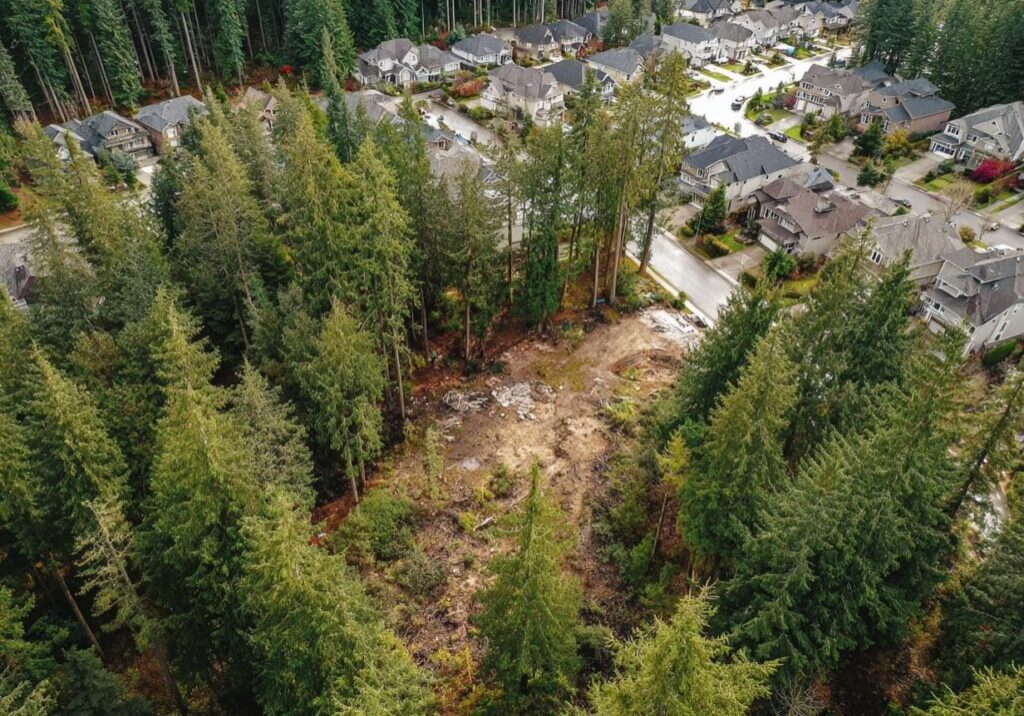
The raw lot to building permit timeline is not one long waiting period. It is a sequence of due diligence, survey work, consultant inputs, design decisions, drawing coordination, servicing checks, and municipal review. The 9-month story below is a realistic pre-construction arc, not a promised timeline, and it works best when custom home architectural design starts before the lot’s risks are hidden inside drawings.
Most buyers imagine the delay starts when construction begins. In reality, the most important work often happens before excavation: confirming what the lot can support, what the municipality needs, what consultants must review, and whether the home design can move into permit drawings without expensive rework.
The 9-Month Timeline At A Glance
A raw lot does not become permit-ready just because a designer starts drawing. It becomes permit-ready when the lot facts, owner goals, consultant inputs, drawings, and municipal requirements all tell the same story.
The timeline below gives you a practical view of what often happens before a building permit. Some sites move faster. Complex sites can take longer because of slope, trees, geotechnical findings, utility prerequisites, consultant availability, or municipal review volume.
Month-By-Month Timeline Table
| Month Range | What Happens | Why It Matters | Common Delay |
| Month 0–1: Lot Feasibility And Due Diligence | Review zoning, site constraints, access, budget fit, and obvious risk factors | Helps you understand what you are actually buying | Discovering slope, utility, tree, or bylaw issues after purchase |
| Month 1–2: Survey, Site Data, And Base Documents | Order survey, start site analysis, confirm existing conditions | Gives the design team measured facts to work from | Outdated survey, unclear grades, or missing site constraints |
| Month 2–3: Concept Design And Massing | Test fit, broad layout, siting, access, and massing | Turns buyer goals into a buildable direction | Design goals exceed lot, budget, or bylaw constraints |
| Month 3–4: Consultant Inputs And Feasibility Checks | Geotech, utility capacity, arborist, energy advisor, and civil inputs where needed | Tests assumptions before detailed drawings go too far | Consultant findings change basement, foundation, or site plan |
| Month 4–6: Design Development And Drawing Coordination | Refine plans, elevations, sections, Step Code strategy, structure, and envelope choices | Turns the concept into coordinated design documents | Late changes to layout, windows, structure, or grading |
| Month 6–8: Permit Drawing Set And Reports | Finalize drawings, schedules, reports, forms, and energy documents | Prepares the package for municipal intake and review | Missing documents or uncoordinated drawings |
| Month 8–9+: Submission, Intake, And Review Comments | Submit package, respond to intake or review comments | Starts the municipal review path toward permit issuance | Incomplete application, servicing prerequisite, or review volume |
Month 0–1: The Lot Feasibility Work Buyers Often Skip

A raw lot is not just empty land. It is a bundle of constraints, risks, and opportunities that need to be understood before design gets emotional.
The first month is about asking better questions before you commit. What looks like a simple lot may carry slope risk, tree constraints, servicing problems, zoning limits, or consultant requirements that change the true budget.
The First Question Is Not “Can We Build?” But “What Are We Buying?”
A better first question is: what does this lot demand from the project? A flat lot with straightforward access is a different purchase than a treed slope with old services, tight frontage, and uncertain soils.
In Greater Vancouver, this matters because many desirable lots have real constraints: older teardown conditions, lane access, ravines, mature trees, steep grades, or utility services that were sized for a much smaller home. None of these issues means the lot is bad. They mean the lot needs a clearer plan before you rely on simple cost assumptions.
Due diligence protects the buyer from falling in love with the view, then discovering the site needs major retaining, shoring, servicing, or redesign before construction can even begin.
What To Check Before You Fall In Love With The Lot
Early checks should cover zoning, allowable building form, slope and frontage, access, trees, servicing availability, floodplain or environmental flags, demolition conditions, likely consultant needs, and early budget fit. The point is not to solve everything at once. The point is to identify which risks could change the purchase decision or the design path.
Buyers often remember the exciting parts and forget the hard ones, which is where a pre-construction checklist earns its keep, framing the first round of questions before the project moves into detailed design.
The earlier you find a risk, the more options you have. After purchase, design, and consultant commitments begin, the same risk becomes harder to absorb.
What Usually Goes Wrong At This Stage
The most common mistake is assuming the lot price is the main cost variable. It is not. The lot may require retaining walls, utility upgrades, arborist input, geotechnical review, tree protection, environmental review, or a more complex permit path.
Buyers also underestimate how quickly one hidden issue can affect several parts of the project. A slope issue can affect foundation design, driveway comfort, drainage, excavation, and budget. A utility issue can affect service-room location, basement feasibility, and permit timing.
This is why early feasibility is not bureaucracy. It is risk control before the custom home design gains momentum.
Month 1–2: Survey, Site Analysis, And The Base Documents

Once the lot looks viable, the project needs measured information. A custom home cannot be designed reliably on assumptions, old listing drawings, or online maps.
This phase turns the site from a general idea into a documented base. The better the base information, the fewer times the team has to redraw later.
Why The Survey Comes Before Real Design
A current survey gives the design team the measured lot boundaries, site dimensions, existing conditions, and often grade information needed to place the home accurately. It is the foundation for setbacks, siting, grading, and permit drawings.
This is especially important for raw lots, teardown lots, and sloped properties. Old information may not show changed grades, retaining work, site services, or current access conditions. If the design starts from stale data, the permit package can look polished but still be wrong.
A survey does not make design decisions. It makes design decisions possible.
Site Plan And Grading Start With The Same Base, But Solve Different Problems
The survey records existing conditions. The site plan shows the proposed building and site layout. The grading plan resolves finished grades, drainage, retaining, and how the new home meets the land.
These documents often get confused, which creates delay. A clear breakdown of site survey vs site plan vs grading plan helps the team match each document to the right question.
When the base documents are clear, the designer can test siting, access, and grade impacts earlier. That is where redraws get prevented.
Why Early Site Data Protects The Design
Design changes are cheapest before the drawings are detailed. If the team discovers late that a driveway slope does not work, a grade is different than assumed, or a setback was misunderstood, the impact can spread across site plans, floor plans, elevations, and structure.
Early site data supports the “design once” mindset. That does not mean the first idea is final. It means the team is making informed design moves instead of guessing and correcting later.
A better base leads to better decisions, cleaner pricing, and a more stable path to permits.
Month 2–3: Concept Design Turns The Lot Into A Buildable Direction

Concept design is where the lot and the wish list meet. This is the first major test of whether the buyer’s goals fit the physical, financial, and regulatory reality of the property.
The output is not a final permit package. It is a buildable direction that lets the team move forward without pretending every detail is already solved.
Concept Design Is Where The Lot And Wish List Meet
During concept design, the team studies building placement, massing, garage and driveway location, views, privacy, daylight, outdoor space, and broad budget alignment. The goal is to find the best version of the home the site can support.
This phase often reveals trade-offs. A view-oriented layout may affect excavation. A lower level may affect drainage. A garage position may change access and frontage work. A large window strategy may affect energy modelling and structural coordination.
Good concept design does not simply draw what the buyer wants. It translates goals into a direction the lot can support.
What Gets Decided At This Stage
The team usually starts to settle broad decisions such as footprint, number of levels, garage location, driveway approach, basement intent, entry sequence, primary outdoor living area, and major view or daylight priorities.
These decisions may still evolve, but they should become stable enough for consultants to test assumptions. If the footprint changes every week, geotech, civil, structural, and energy inputs become harder to use.
A strong concept gives the next phase something to evaluate. Without it, consultants may answer the wrong questions.
Why The Buyer’s Budget Needs To Stay In The Conversation
Concept design can drift if budget is not tied to scope. A larger basement, more retaining, complex rooflines, extra glazing, or a difficult site access strategy can all add cost before construction begins.
This is why fixed-price clarity only becomes meaningful after scope is defined. A builder cannot price what has not been resolved. At this stage, the team should keep testing whether design ambitions align with the budget and the site.
The best early concepts are not the biggest. They are the clearest.
Month 3–4: Consultants Test The Assumptions

By Month 3 or 4, the concept is strong enough that outside inputs can test it. This is where the project starts to move from “design idea” to “design that can survive the site.”
Not every lot needs every consultant at the same depth. The right question is: which findings could change the design, budget, permit path, or construction sequence?
Geotechnical Inputs Can Change The Whole Below-Grade Strategy
A geotechnical report can affect foundation direction, excavation depth, shoring, retaining, groundwater planning, and sometimes whether the desired basement is realistic. On sloped, filled, tight, or deeper-excavation sites, geotech can change the below-grade strategy before the permit set is drawn.
Whether or not the lot needs a geotechnical report for a custom home lot should be settled before foundation or basement assumptions get locked into drawings.
Geotech is not a formality when it can change the project. It is one of the strongest ways to reduce surprises before excavation.
Utility Capacity Can Change The Plan Before Permits
Utility capacity checks can affect water, sewer, storm, electrical, gas, and telecom planning. They matter on all-electric homes, EV-ready homes, larger custom homes, homes with suites, deeper basements, older teardown lots, and lots with awkward frontage.
A utility issue can change where the service room belongs, whether gravity drainage works, whether stormwater needs more coordination, or whether a separate servicing application is needed before the main permit. These are not small details if they arrive late.
The core lesson is simple: check services against the proposed home, not the old home or the listing description.
Trees, Energy, Civil, And Envelope Inputs All Start To Matter
Depending on the site, this phase may also involve arborist input, energy advisor assumptions, civil or drainage review, and early envelope choices. A treed lot may need tree protection strategy. A Step Code target may affect wall assemblies and window strategy. A sloped site may need civil input to resolve drainage and grading.
The goal is not to over-study everything. The goal is to identify the inputs that could change the design before the design becomes expensive to change.
This is where coordinated pre-construction saves real time. The earlier the right consultant enters, the more useful their advice becomes.
Month 4–6: Design Development Turns Direction Into Drawings

Design development takes the approved concept and starts turning it into coordinated drawings. The plans, elevations, sections, site strategy, and early technical decisions become more defined.
This is the phase where the home begins to carry real cost. Every major change now affects more drawings, more consultants, and more pricing assumptions.
This Is Where Details Start To Carry Cost
During design development, the team refines floor plans, elevations, sections, structural direction, grading intent, mechanical strategy, wall and roof assemblies, window placements, and energy-performance assumptions.
These details matter because they turn design intent into buildable scope. A window is no longer just “a big view.” It affects structure, energy, privacy, cost, and permit drawings. A basement is no longer just “more space.” It affects geotech, excavation, drainage, waterproofing, and schedule.
Design development is where the project should become more certain, not more vague.
Coordination Prevents The “Late Redraw” Spiral
Late changes ripple. Moving the house affects grading. Changing basement depth affects geotech and drainage. Changing window sizes affects energy modelling and elevations. Changing rooflines affects structure and permit details. Changing service locations affects utility and site planning.
A late redraw rarely affects one drawing. It can affect five or more. That is why this phase needs calm decision-making and clear coordination.
The goal is not to freeze every detail too early. The goal is to lock the big decisions before the team spends time detailing a direction that may not hold.
The Team Should Be Watching For Permit Readiness Already
Permit readiness does not begin when someone says, “Let’s submit.” It begins during design development, when the team checks whether the drawings, reports, site data, energy assumptions, and consultant inputs are all aligned.
A permit-ready set is not just a stack of drawings. It is a coordinated package where the site plan, elevations, grades, structural approach, servicing assumptions, and supporting reports do not contradict each other.
If the project waits until the end to check consistency, it often finds problems when time pressure is highest.
Month 6–8: The Permit Drawing Set Comes Together

By Month 6 to 8, the project should be moving from design development into permit documentation. This phase is about assembling the drawings, forms, schedules, reports, and supporting documents the municipality needs to review.
A clean permit set is not always a fast approval, but it gives the project its best chance of moving through intake and review without avoidable friction.
The Permit Set Is More Than Floor Plans
A building permit drawing set can include site plan, floor plans, elevations, sections, schedules, energy documents, consultant reports, forms, and supporting drawings depending on the municipality and site conditions.
Completeness Matters As Much As Design Quality
Vancouver’s building permit guidance notes that applicants must include the application form and required documents listed in the applicable checklist, and that the City’s policy is not to accept incomplete applications. The package is assessed at intake, and additional documents may be requested before fees and detailed review move forward.
That matters because a beautiful design can still stall if the package is incomplete. Permit timing is often less about how good the design looks and more about whether the drawings, reports, and prerequisites are ready for review.
Servicing And Prerequisites Can Affect Submission Timing
Vancouver’s February 2026 single detached and duplex submission checklist states that a Sewer/Water application is a prerequisite for the Development/Building application, and that the DB application will not be accepted if the SW application has not been submitted.
This is a good example of why a raw lot timeline is not just “design, then permit.” Servicing, reports, and prerequisites can affect when the main package can even enter the queue.
A team that catches those prerequisites early protects the schedule from avoidable intake delays.
Month 8–9+: Submission, Intake, Review, And Conditions

Submission is an important milestone, but it is not approval. Once the package is submitted, the municipality reviews it for completeness, then moves into detailed review and comments.
This stage can be calm or frustrating depending on how well the pre-construction work was coordinated before submission.
Submission Is Not The Same As Approval
When a permit package is submitted, the review path begins. Intake may identify missing documents. Reviewers may ask for clarifications. Conditions may need to be addressed before the permit can be issued.
That means “we submitted” does not mean “we can start tomorrow.” Construction usually starts after the permit is issued, required trade permits are addressed, and any pre-construction conditions are understood.
A good team treats submission as a handoff into review, not the finish line.
What Usually Comes Back In Review Comments
Common review themes include missing or inconsistent documents, survey and site plan conflicts, grading or drainage clarification, energy or Step Code documentation, tree or arborist requirements, servicing or utility prerequisites, geotechnical or shoring clarification, and zoning or bylaw interpretation.
Some comments are routine. Others reveal coordination gaps that should have been resolved earlier. The difference often depends on how well the set was reviewed before submission.
The best response strategy is one coordinated team answering comments quickly and consistently, instead of separate consultants solving isolated issues.
How The 9-Month Story Can Stretch
The timeline can stretch because of incomplete applications, municipal workload, consultant revisions, unexpected site constraints, or design changes after submission. Vancouver’s guidance on building a new home, duplex, or laneway house notes that processing times vary based on application complexity, completeness, and current volume, which supports treating timelines as planning ranges rather than guarantees.
This does not mean the process is out of your control. It means your best control is readiness: better documents, earlier risk checks, and faster responses when review comments arrive.
Why Buyers Underestimate The Pre-Construction Phase

Buyers often judge progress by what they can see. Before construction, much of the progress is invisible: consultant emails, drawing revisions, permit prerequisite checks, and design decisions that keep the project from stalling later.
That invisibility makes pre-construction feel slower than it is. In a well-run process, each month should reduce uncertainty.
The Work Is Mostly Invisible
A buyer can stand on the lot and imagine the finished home. What they cannot see is the surveyor confirming site conditions, the geotechnical engineer testing assumptions, the designer adjusting massing, the energy advisor modelling performance, or the permit team coordinating prerequisites.
This hidden work is not “waiting.” It is the work that makes construction possible. It turns a vague dream into a buildable, reviewable, and eventually constructible home.
Without that work, construction starts with more risk, more field decisions, and more change orders.
Every Month Should Be Producing Decisions, Not Just Waiting
A healthy pre-construction process produces decisions. Month by month, the team should get clearer on feasibility, siting, grade strategy, servicing, structure, energy approach, permit documents, and owner approvals.
If months pass without decisions, the timeline is drifting. If months pass and the risk list gets shorter, the project is moving.
This is why documentation matters. A decision that is made but not recorded can be lost when drawings change or consultants update their work.
The Real Goal Is Fewer Surprises At Construction
The goal of pre-construction is not paperwork for its own sake. The goal is fewer surprises when the project reaches excavation, foundation, framing, and rough-ins.
Good due diligence and coordinated permit drawings reduce change orders, rushed fixes, and field improvisation. They also help the builder schedule trades with more confidence.
In a custom home, the most expensive surprise is often the one that should have been discovered before permit submission.
How To Keep The Timeline From Drifting

The raw lot to permit timeline drifts when responsibility is fragmented, decisions stay open too long, or consultants work from different assumptions.
The fix is not pressure. The fix is sequencing, ownership, and decision tracking.
Make One Team Responsible For The Sequence
Raw lot pre-construction can fragment quickly if the buyer hires consultants separately without a clear lead. The surveyor, designer, geotech, arborist, energy advisor, civil consultant, structural engineer, and builder all affect the permit path.
One team needs to own the sequence: who starts when, what inputs they need, what decisions they affect, and how their findings feed back into drawings.
Without that coordination, the buyer becomes the project manager by default, and important handoffs get missed.
Lock The Big Decisions Before The Details
Some decisions must stay flexible early. Others need to settle before the team spends serious time on detailed drawings. Basement depth, siting, access, structural direction, energy approach, primary exterior expression, and major glazing strategy all belong in that “lock early” category.
If those decisions keep changing, details become disposable. That creates design fatigue, consultant rework, and schedule drift.
The project does not need every finish selected before permits. It does need the major design and site assumptions stable enough for coordinated documents.
Keep A Decision Log
A decision log keeps the project from re-litigating the same issues. It should track design direction, consultant recommendations, bylaw and permit assumptions, site constraints, budget-impacting scope, and owner approvals.
This does not need to be complicated. It needs to be accessible and current. The value is that everyone can see what was decided, why it was decided, and whether a later change affects schedule or budget.
A good decision log reduces confusion and keeps the team aligned as the permit package comes together.
Raw Lot To Building Permit Checklist

A checklist helps buyers see the full arc instead of reacting to each task as it appears. Use this as a practical pre-construction path from lot review to permit readiness.
The list is not a guarantee of timing. It is a way to avoid missing the work that often causes delays when left too late.
The Buyer’s 12-Step Checklist
- Confirm zoning and basic build feasibility
- Review lot conditions: slope, frontage, trees, access, and services
- Order or confirm a current survey
- Complete early site analysis before locking design direction
- Confirm whether geotech is required or recommended
- Check utility capacity and servicing prerequisites
- Develop concept design that fits the lot and budget
- Confirm consultant inputs before deep design development
- Coordinate floor plans, elevations, sections, site plan, and grading intent
- Assemble permit drawings, reports, forms, and energy documents
- Review the set for consistency before submission
- Respond to intake and review comments quickly, with one coordinated team
This checklist gives you a way to ask better questions in every project meeting. The more items you can answer clearly, the closer you are to a permit-ready package.
What To Watch Before You Submit
Before submission, look for consistency across the survey and site plan, grading and elevations, geotech recommendations and foundation drawings, utility assumptions and site plan, energy documentation and envelope choices, and owner selections that affect permit drawings.
Inconsistency is what often creates avoidable comments. A reviewer may not care which consultant created the conflict. They care that the submitted package does not resolve it.
A final coordination review before submission is one of the simplest ways to protect the timeline.
How Versa Homes Helps You Move From Raw Lot To Permit-Ready

The raw lot to permit journey is easier when feasibility, design, consultants, and drawings are sequenced properly. We help you turn early lot uncertainty into a coordinated path: site due diligence first, design decisions second, permit documentation only when the facts and scope are aligned.
Versa Homes supports that process with fixed-price contracts once scope is defined, a detailed build schedule with pre-booked trades, and a client portal that keeps daily logs, progress photos, consultant inputs, and approvals organised. If you are considering a raw lot or teardown property in Greater Vancouver, start with our architectural design services so the path to permit-readiness is planned before the project gets expensive to change.
Frequently Asked Questions
How Long Does It Take To Go From Raw Lot To Building Permit?
A 6–9+ month pre-construction path is common for custom home planning, but it is not guaranteed. Timing depends on lot complexity, municipality, consultant requirements, design changes, application completeness, and review volume. A straightforward lot with strong base documents can move faster. A sloped, treed, or servicing-constrained lot can take longer because more questions need to be resolved before permit submission.
What Happens Before You Submit A Building Permit?
Before submission, the team usually completes feasibility review, survey work, site planning, concept design, consultant coordination, permit drawings, energy documentation, and any required reports. The goal is to submit a coordinated package, not just a design idea. That means the site plan, drawings, reports, and forms need to align.
Why Does A Raw Lot Take Longer Than A Simple Renovation?
A raw lot often has more unknowns: servicing, soils, grading, access, trees, environmental flags, and buildability. Those questions need to be answered before the home can be placed, designed, and submitted confidently. A renovation can still be complex, but a raw lot often requires more base information before design decisions are safe to lock.
Do I Need A Survey Before Designing A Custom Home?
Yes, a current survey is usually needed before reliable site planning and permit drawings. Without it, setbacks, grades, site constraints, and proposed building placement may be based on assumptions. You can brainstorm before a survey, but you should not rely on permit-level design without current measured information.
When Should I Order A Geotechnical Report?
Order geotech early when the lot has slope, unknown fill, deep excavation, tight neighbour conditions, ravine or creek proximity, groundwater concerns, or when the municipality requests it. The report is most useful when it can still influence basement depth, foundation direction, shoring, grading, and site planning.
What Causes The Most Delays Before Building Permit Approval?
Common causes include incomplete drawings, missing reports, servicing prerequisites, survey and site plan inconsistencies, late design changes, utility issues, geotechnical concerns, tree requirements, and municipal review volume. Many of these delays can be reduced by doing the right due diligence early and reviewing the full package before submission.
Can I Start Construction As Soon As The Permit Is Submitted?
No. Submission starts the review process. Construction can usually begin only after the permit is issued and required trade permits, conditions, and pre-construction requirements are addressed. Treat submission as a milestone, not permission to build.
How Can A Builder Help Before The Permit Is Issued?
A builder can coordinate due diligence, schedule consultants, flag cost and buildability risks, align design decisions with budget, and prepare the project for construction while permit drawings are developed. The right builder also helps keep the pre-construction sequence moving so the buyer is not left managing disconnected consultants.

Felipe Freig
Founder of Versa Homes
Felipe Freig is the founder of Versa Homes, a Vancouver custom home builder known for architecturally driven, fixed-price projects. With years of hands-on site experience and deep permitting and by-law knowledge, Felipe leads high-performance teams that deliver precision craftsmanship, clear budgets, and on-schedule luxury homes.
You May Also Like...

Why Langley is a Top Location to Build a Custom Home in BC

Nurturing Your Custom Home: 5 Things to Keep in Mind After Construction
Interior Design: Clever Storage Solutions for Your Custom Home

Understanding Fluctuations in Building Material Costs

Safe Rooms and Panic Rooms: Design Considerations for Custom Homes
Unveiling the Top Luxury Custom Home Design Trends of 2023
How Long Does It Typically Take to Build a Custom Home?