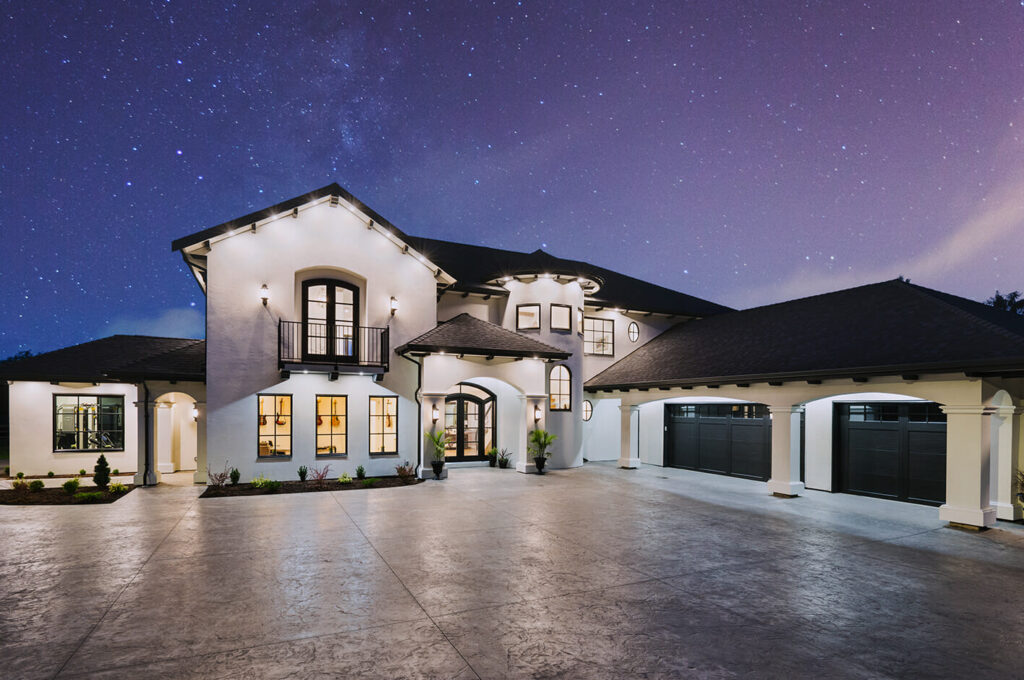
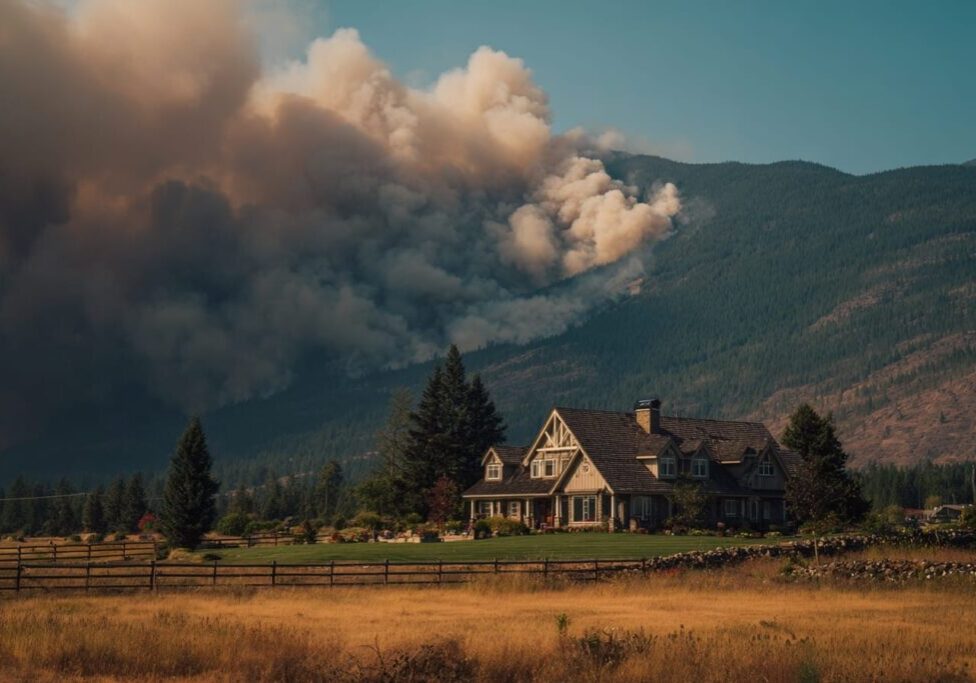
If your lot sits near forest, greenbelt, ravine, or treed slopes, WUI design is about reducing ignition risk with smart, buildable decisions, not “fireproofing.” The biggest wins usually come from roof and gutter choices, vent and opening details, deck attachments, and a clear plan for the near-home landscaping zones. We build these priorities into the early stages of custom home architectural design so they don’t get missed when drawings get detailed and trades get booked.
To put it simply, the Wildland-Urban Interface (WUI) is where homes and wildland vegetation meet or mix, which can increase exposure to embers, heat, and fast-moving fire behaviour. WUI lots also tend to have site constraints that matter in a wildfire event, like slope, wind exposure, limited road access, and heavy seasonal debris in gutters.
Use this page as a practical design checklist. It won’t replace your municipality’s requirements or local fire authority guidance, but it will help you make high-impact choices early and document them clearly so they carry through construction.
WUI Design Basics Checklist (High-Impact Priorities):
- Keep roofs and gutters cleanable and ember-resistant
- Reduce ember entry points at vents, eaves, and gaps
- Choose exterior materials and details that reduce ignition risk
- Detail decks and attachments so they don’t become a “fuse” to the house
- Plan landscaping by distance (Home Ignition Zone)
- Confirm access, turnaround space, and practical evacuation routes
- Write it into the design brief and drawings so it survives coordination
What WUI Means And Why It Changes Custom Home Design
WUI isn’t only a label. It’s a set of conditions that change what “good detailing” looks like. In an edge-of-city setting, wildfire risk often comes from embers landing on the home and nearby fuels, not from a wall of flame reaching the house directly.
That’s why WUI design basics focus on the parts of a home that embers can reach easily: roof edges, gutters, vents, decks, and gaps where debris collects. Small details matter more than most homeowners expect.
Interface Vs Intermix
The Province of BC describes WUI as areas where combustible wildland fuels sit adjacent to homes and structures. That can happen at the interface (a clearer boundary where development meets forest fuel) or the intermix (homes and vegetation intermingled with no clear boundary). Both conditions can show up in Greater Vancouver’s edge neighbourhoods, depending on how development meets treed slopes and green space.
For homeowners, the key difference is practical. In an intermix setting, fuels may exist throughout the neighbourhood, so near-home choices and community-level fuel management both matter. In an interface setting, you may have a clearer “edge,” but you can still face ember exposure and wind-driven conditions that push embers into roofs, decks, and landscaping.
How Homes Ignite In WUI Events
Most ignition pathways can be explained in three buckets: embers, radiant heat, and direct flame contact. Embers are the most common “surprise.” They can travel ahead of a fire, land in debris, and ignite small fuel sources right at the home.
That’s why WUI design basics aren’t only about big materials. They’re also about eliminating ember catch points and reducing the chance that a small ignition becomes a structure fire. You’re trying to reduce easy starts and slow down fire growth so responders have a better chance, and the home has more resilience.
FireSmart And The Home Ignition Zone Concept
A practical way to plan WUI lots is the Home Ignition Zone concept, which focuses on the 30 m area around the home and breaks it into priority zones by distance. It’s a helpful framework because it tells you where changes matter most, starting right at the building and moving outward.
The City of Vancouver’s FireSmart program page is one clear local reference for those zone distances and priorities, and it aligns with common Home Ignition Zone guidance.
Start With The Lot: WUI Site Assessment Basics
WUI planning starts with the lot because the lot drives exposure. A home on a windy ridge, steep slope, or treed ravine edge needs different priorities than a home with more separation from vegetation and better access.
Treat this step as a short site assessment. You’re looking for conditions that influence ignition risk and response access, then translating them into design constraints your team can work with.
Identify The Conditions That Drive Risk
Start with what you can observe. Note the slope direction and steepness near the home, prevailing wind exposure, and how continuous the vegetation is around the building area. Look for ladder fuels (vegetation that allows fire to climb), dense canopy near the structure, and heavy debris accumulation zones.
Also note access reality. If your road is narrow, steep, or has limited turnaround space, that affects emergency response. If your neighbourhood has only one way out, evacuation planning matters more. These aren’t reasons to panic, but they are reasons to design intentionally.
Use Mapping And Municipal Context To Avoid Guessing
Maps won’t tell you everything, but they can help you avoid guesswork. The BC Wildfire Service publishes Wildland Urban Interface (WUI) risk class map resources that provide provincial-level context for wildfire threat and risk reduction planning. Use them as a starting point, then confirm what applies to your specific address and conditions on the ground.
Municipal guidance also matters because access requirements, landscaping expectations, and development conditions vary. If your lot is near parkland or protected areas, you may also face site constraints that affect where you can clear fuels or place outbuildings. Build your plan around what’s allowed and maintainable.
Translate Site Notes Into Design Constraints
Once you have site notes, turn them into design constraints your team can use. Examples: “Minimize roof valleys and debris traps,” “Keep near-home surfaces non-combustible where feasible,” “Group penetrations away from high-exposure edges,” and “Plan a sheltered entry that doesn’t rely on dense planting in the immediate zone.”
If you want a simple structure for capturing these conditions in a repeatable way, use our site analysis checklist and add a WUI lens to it (fuels, access, and debris zones).
The Home Ignition Zone: Design And Landscaping By Distance

If you only do one thing for WUI readiness, plan the first 30 m around the home. That’s where most practical, homeowner-controlled risk reduction lives. It’s also where design choices and landscaping choices overlap.
This section gives you a simple distance-based framework. It avoids plant lists and technical rules, and it focuses on priorities you can design, build, and maintain.
Home Ignition Zone Table
Use this table as a planning tool for your architect, builder, and landscape designer. It summarizes what to prioritize by zone and what mistakes show up most often on edge-of-city lots. The zone distances below align with the City of Vancouver’s FireSmart program summary of the Home Ignition Zone.
| Zone | What To Prioritize | Common Mistakes |
| Immediate Zone (0–1.5 m) | Non-combustible near-home surfaces, cleanable edges, eliminate ember catch points | Storing combustibles against walls, dense planting at the foundation, debris under decks |
| Intermediate Zone (1.5–10 m) | Reduce continuous fuels, create separation, keep ignition sources away from the home | Firewood stacks near the house, shrubs under windows, continuous hedges acting like a wick |
| Extended Zone (10–30 m) | Thinning and breaks in continuous fuels, slope-aware planning, maintenance strategy | Assuming “farther away means safe,” ignoring slope and wind-driven ember patterns |
Immediate Zone: The First 0–1.5 m From The Home
The immediate zone is where small changes can have outsized impact. Think of it as “the ember landing zone.” Embers tend to settle in corners, crevices, and debris traps. If the first 1.5 m is full of combustible materials and clutter, it increases the chance of a small ignition.
Design choices matter here. Near-home patios, steps, landings, and deck interfaces should be easy to keep clean. Details that trap needles, leaves, and bark mulch right against the home can quietly build risk over time, especially through dry periods.
Intermediate Zone: 1.5–10 m Strategy
The intermediate zone is where you reduce the chance that a fire near the home grows fast. It’s not about stripping the landscape bare. It’s about breaking up continuous fuels and avoiding arrangements that create a direct path to windows, eaves, and decks.
From a design standpoint, this is where you plan outdoor living realistically. You can still have gardens and privacy, but you want a layout that avoids dense, continuous vegetation right up to the home. You also want a clear plan for where firewood, recycling bins, and outdoor furniture live, because those items often end up parked against the house.
Extended Zone: 10–30 m And Slope Considerations
The extended zone often includes shared conditions, neighbour influence, and terrain. On a slope, fire behaviour can intensify and move faster uphill, which changes how you think about vegetation breaks and outdoor structures placed downhill from the home.
This zone is also where long-term maintenance planning matters. If your design assumes you’ll “manage the back treeline later,” be honest about whether that’s realistic. A simpler, maintainable plan tends to outperform an ambitious plan that never gets maintained.
Building Envelope Choices That Reduce Ignition Risk
WUI design basics are mostly about making the envelope harder to ignite and harder for embers to enter. You’re reducing weak points and simplifying details that collect debris.
This section stays at the design level. Specific products and specifications depend on your project, municipality, and the exposure conditions on your lot.
Roofing And Gutters: Reduce Ember Catch Points
Roofs and gutters are common ember collection areas. In edge-of-city neighbourhoods, seasonal debris can build up quickly, and dry debris is a straightforward ignition source. A roof that’s difficult to access and difficult to clean is a practical risk, regardless of how good it looks in renderings.
Design basics include simplifying roof geometry where you can, reducing valleys that collect debris, and planning safe maintenance access. Even small changes like reducing unnecessary roof breaks can improve cleanability and reduce debris traps.
Eaves, Soffits, And Vents: Close The Easy Entry Points
Embers look for openings. Vents, gaps at eaves, and poorly detailed soffit areas can become entry points for embers and smoke. In WUI conditions, you want a strategy for how openings are protected and how the assembly stays tight over time.
This is also a coordination point. Mechanical ventilation, attic ventilation, and exterior detailing must align. If one consultant adds vents late, it can undermine the envelope strategy. Make vent placement and protection part of the early conversation, not a last-minute add-on.
Exterior Cladding And Trim: Choose Materials That Fit WUI Conditions
Cladding choices matter, but detailing often matters more. Combustible trims, exposed joints, and complex transitions can create ignition opportunities, especially where debris collects or where the cladding meets a deck.
A practical approach is to choose a cladding system that fits the exposure level and then detail transitions for cleanability. Pay attention to base conditions near grade, deck-to-wall interfaces, and any areas that routinely get wet, dirty, or debris-laden. Those zones tend to be where maintenance is hardest and where ignition risk can quietly build.
Windows And Glazing: Heat And Ember Exposure Basics
Windows are often overlooked in WUI planning because people think of them as a style choice. In reality, they’re part of the envelope’s exposure story. The goal is to avoid creating vulnerable openings in the most exposed zones and to make sure surrounding details don’t invite ember accumulation.
From a design lens, placement matters. Large glazing areas facing heavy fuels may increase exposure. Screens, overhangs, and landscaping layout can also affect how embers and heat interact with openings. You don’t need to compromise design intent, but you do need to plan openings in context.
Doors, Garage Openings, And Weather Seals
Gaps are the enemy in WUI conditions. Doors and garage openings are large, movable pieces of the building envelope, which makes them a common point of leakage and debris accumulation.
Design basics include robust thresholds, clean transitions, and weather detailing that stays durable. This is also where “future-proofing” helps. If seals and thresholds are detailed well from the start, you reduce the chance of drafts, debris, and ember intrusion later.
Decks And Attached Structures: Don’t Create A Fuse To The House
Decks can become ignition pathways when they trap debris, store combustibles, or connect combustible surfaces directly to the home. The risk often lives underneath the deck and at the deck-to-wall connection, where needles and leaves collect and are hard to clean.
Design basics include detailing attachments to reduce debris traps and avoiding using the deck perimeter as a storage zone for combustible items. You can still build great outdoor living. The key is to make it cleanable, durable, and intentional in how it meets the house.
Site Planning For Fire Access And Evacuation
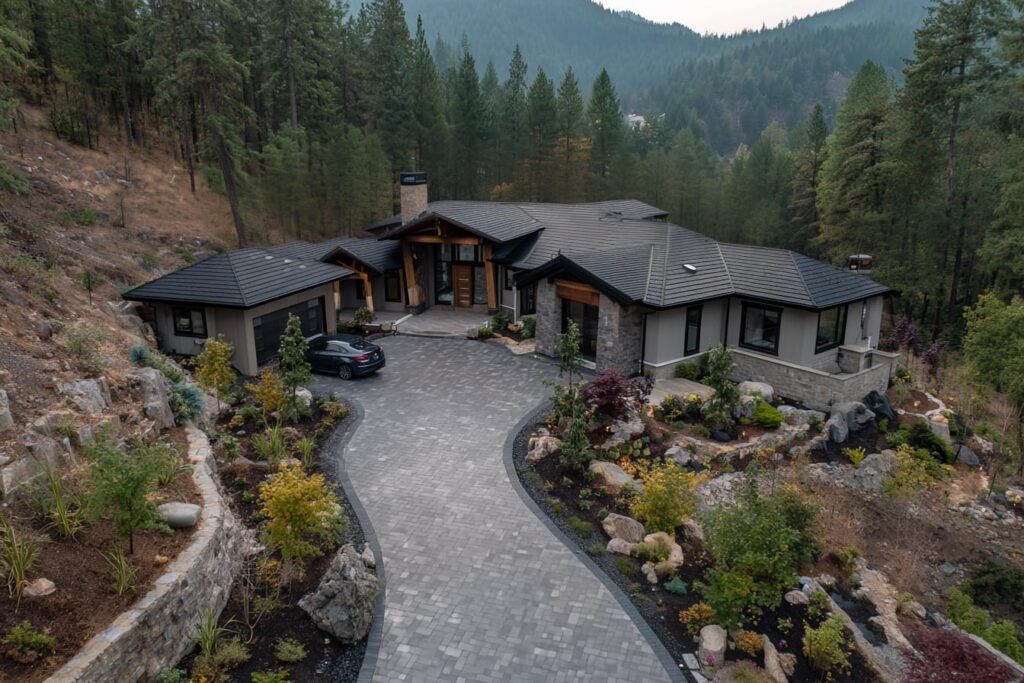
WUI design isn’t only the house. It’s also access, turning space, and practical routes for responders and homeowners. On edge-of-city lots, especially near slopes and tree cover, access issues can become the limiting factor in an emergency.
This section is not a code substitute. Use it to identify questions to confirm with your municipality and local fire authority early.
Driveway Access And Turnarounds: Plan For Emergency Vehicles
Driveway geometry and grades affect response access. Tight pinch points, steep grades, and limited turnaround space can complicate emergency vehicle movement. If the lot is long and narrow, or if the access road is shared, early planning is critical.
A practical approach is to treat access as a design constraint from day one. Confirm where vehicles can turn around and where staging might occur. If access is constrained, it’s even more important to reduce ignition risk at the home itself, because response may be slower or more limited.
Water Supply, Hydrants, And Staging Space
Response capability depends partly on available water sources and workable staging. In many neighbourhoods, hydrants and municipal systems provide coverage. In others, site-specific water planning may be part of the discussion.
At the design stage, the key step is coordination. Confirm what’s available, what’s required, and what’s realistic for your site. Avoid making assumptions based on a different municipality or a different neighbourhood type.
Egress And Practical Evacuation Planning
Evacuation is a homeowner reality in some WUI situations. Practical egress planning means clear exits, good lighting and wayfinding, and site organization that reduces last-minute confusion. It also means thinking about the “one way out” problem if your area has limited road access.
You don’t need to design a bunker. You need a plan that makes everyday life easier and emergency movement clearer. A calm plan, written down and understood, is usually more effective than a complex plan nobody follows.
Documentation And Coordination: Put WUI Intent In Writing
WUI details are easy to lose in the middle of a custom home build. The roof gets refined, vents get added, landscaping evolves, and what started as a clear goal becomes “we’ll handle it later.” Later is usually the most expensive time to fix it.
The solution is boring but effective: write it into the brief and drawings, and review it with a WUI lens before you approve the set.
Add WUI Priorities To Your Design Brief
If WUI intent isn’t in writing, it’s not a constraint. It becomes a preference, and preferences get traded away when budgets tighten or schedules compress. Your brief should include statements like “reduce debris traps at rooflines,” “plan near-home zones for ignition risk reduction,” and “minimize unplanned penetrations in high-exposure areas.”
If you want a clean way to turn WUI goals into requirements your design team can act on, start with this design brief for your custom home framework and add a WUI section to it.
A brief also helps align consultants. Mechanical, roofing, landscape, and structural decisions all influence WUI outcomes, and the brief keeps those decisions pointed in the same direction.
WUI Details In Drawings And Specs
WUI performance lives in details and notes. Roof plans should show penetration intent. Elevations and sections should clarify vulnerable transitions. Deck details should show cleanable conditions and avoid hidden debris traps.
A simple rule applies: if a critical WUI choice isn’t shown, a trade will fill the gap with a default. Defaults aren’t always wrong, but they’re rarely WUI-optimized. Clear drawings reduce improvisation and keep risk-reduction choices intact through construction.
Code, Setbacks, And Fire Exposure Between Buildings
WUI design often overlaps with broader fire safety concepts, including how close buildings sit to each other and how exterior exposures are managed. Your municipality and the BC Building Code framework influence what’s permitted and how exterior assemblies are treated, especially in tighter neighbourhood contexts.
If you want a plain-English companion piece on one related concept (fire exposure between buildings), see our guide to BCBC Part 9 spatial separation and use it as context, not as DIY code instruction.
Common WUI Design Mistakes On Edge-Of-City Lots
Most WUI mistakes aren’t dramatic. They’re small decisions that compound into higher risk: debris traps that never get cleaned, vents placed without protection intent, landscaping that becomes continuous fuel, and storage habits that put combustibles against the home.
Use these mistakes as a quick checklist to pressure-test your plan before you finalize drawings and landscaping.
Treating Landscaping As Decoration Instead Of Fuel Management
Landscaping is part of wildfire resilience. If the landscape is designed only for aesthetics, it can accidentally create continuous fuel right up to windows, decks, and soffits. That increases exposure and reduces the time you have to respond if embers land.
A better approach is to design landscaping with zones and maintenance in mind. It can still look great. The difference is that it stays intentional by distance from the home and avoids arrangements that act like a wick.
Debris Traps At Rooflines, Valleys, And Under Decks
Valleys, complex roof intersections, and under-deck cavities are common debris zones. In edge-of-city neighbourhoods, needles and leaves can accumulate quickly, especially in fall and during storms.
Design basics include simplifying roof geometry where you can, planning for cleanability, and avoiding details that create hidden pockets. If a homeowner can’t reasonably clean it, it will become a long-term problem area.
Overlooking Small Openings Like Vents And Gaps
WUI exposure often exploits the small stuff: gaps at eaves, unprotected vents, and openings that allow embers to enter assemblies. These issues are easy to miss because they’re not dramatic on drawings.
This is why documentation matters. If the project doesn’t call out vent and opening intent, it’s easy for late-stage changes to introduce new openings in the most exposed parts of the envelope.
Storing Combustibles Against The Home
This is a lifestyle and site-planning issue, not just a design issue. Firewood stacks, bins, planters, furniture, and storage boxes often end up placed against exterior walls or under decks. In WUI conditions, that can create a direct ignition source in the immediate zone.
Good design helps by creating obvious, convenient storage zones away from the home. If the home has nowhere logical to store items, people will store them wherever they fit.
Ignoring Wind And Slope When Placing Outdoor Spaces
Wind and slope influence how embers move and where exposure concentrates. A patio tucked into a downhill treeline may feel private and calm, but it may also sit closer to continuous fuels than you’d choose if you were thinking WUI-first.
The fix is not to eliminate outdoor living. It’s to place it intentionally, keep near-home zones easier to manage, and avoid landscape and structure layouts that concentrate risk in hard-to-maintain corners.
How Versa Homes Helps You Design For WUI Conditions
WUI design basics work best when they’re treated like part of the build strategy, not a late-stage add-on. We help you translate WUI priorities into clear drawings and buildable details, then keep those details intact with fixed-price scope clarity, a detailed build schedule with pre-booked trades, and a client portal that tracks decisions and documentation with progress photos and daily logs. If you’re planning an edge-of-city lot, start with our custom home architectural design services so WUI intent is built in from day one.
Frequently Asked Questions
What Is The Wildland-Urban Interface (WUI)?
WUI is where homes and combustible wildland vegetation meet or intermingle, which can increase wildfire exposure.
How Do I Know If My Lot Is In A WUI Area In Greater Vancouver?
Start with your on-site conditions (treed slopes, greenbelt edges, continuous vegetation) and use provincial mapping as context. Then confirm with your municipality and local fire authority guidance for your address.
What Is The Home Ignition Zone, And Why Does It Matter?
The Home Ignition Zone is the area within 30 m of your home, divided into distance-based zones that guide what to change first to reduce ignition risk. The City of Vancouver provides a clear local overview of these zones.
What Are The Highest-Impact WUI Design Choices For A New Custom Home?
Focus on roof and gutter cleanability, vent and opening detailing, exterior material choices and transitions, deck interfaces, and near-home landscaping zones. Document these decisions in drawings so they survive coordination.
Are Decks A Problem In WUI Areas?
Decks can increase risk if they trap debris or connect combustible surfaces to the house. Good detailing, cleanable under-deck conditions, and smart near-home zone planning reduce that risk.
What Should I Tell My Architect Or Builder If I Want WUI-Ready Design?
Put it in writing: call out WUI priorities in your design brief, confirm the Home Ignition Zone approach for landscaping, and ask for roof/vent/deck details to be clearly documented before construction starts.
Does WUI Design Mean I Have To Give Up Modern Architecture?
No. Modern forms can work well, but they often require stronger planning for drainage, fewer debris traps, and clearer detailing at roof edges, parapets, and penetrations.
Does WUI Design Add Cost To A Custom Home?
Some improvements are low-cost (simpler roof geometry, better documentation, fewer debris traps). Others may involve material upgrades or added coordination. Planning early usually keeps costs lower than retrofits later.

Felipe Freig
Founder of Versa Homes
Felipe Freig is the founder of Versa Homes, a Vancouver custom home builder known for architecturally driven, fixed-price projects. With years of hands-on site experience and deep permitting and by-law knowledge, Felipe leads high-performance teams that deliver precision craftsmanship, clear budgets, and on-schedule luxury homes.
You May Also Like...

Site Survey Vs Site Plan Vs Grading Plan: What Each One Does

What to Ask a Custom Home Builder Before You Hire Them
Foundations for Waterfront Custom Homes: Piles, Ground Improvement, and Liquefaction

City Vs. Suburban Living: What’s Right for Your Custom Home Build?
5 Luxurious Custom Home Features to Elevate Your Lifestyle

Vancouver Building Permit Drawing Set: What Your Application Must Include