
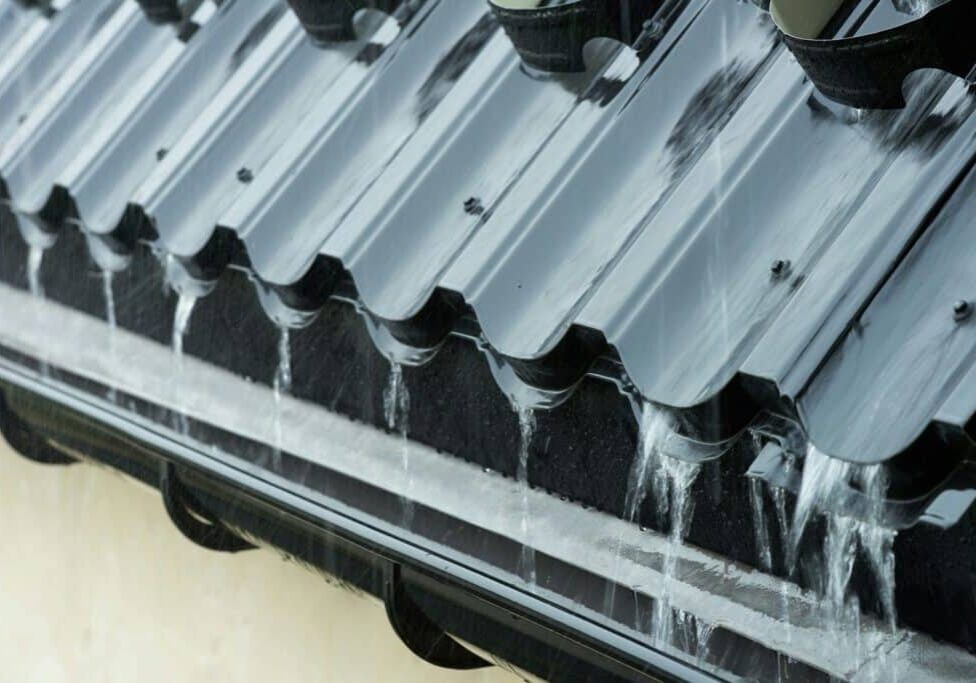
Roof assemblies that work in a West Coast climate do four things well: they manage bulk water, control air leakage, handle vapour safely, and give the roof a reliable way to dry. If you’re building in Greater Vancouver, that usually means choosing an assembly that matches your roof shape and ceiling type, then documenting the details so trades can build it the way it was designed. This is exactly the kind of coordination that belongs in early architectural design services, before rooflines and penetrations get locked in.
A roof assembly is the full roof system, from roofing and underlayment to ventilation, insulation, air sealing, and vapour control, working together as one. To put it simply, you’re not just choosing shingles or membrane. You’re choosing how the roof keeps rain out, keeps warm air where it belongs, and avoids hidden condensation that can lead to mould or rot.
In this guide to roof assemblies for West Coast climate, we’ll cover what makes the Lower Mainland different, how vented and unvented (compact) roofs compare, what changes with vaulted ceilings and low-slope designs, and what to look for in drawings so the assembly gets built correctly.
What Makes West Coast Roofs Different

West Coast roof performance is mostly about moisture. Not just leaks, but the kind of moisture you don’t see until it becomes damage. A roof can look perfect on the outside and still struggle if air sealing, ventilation paths, or drying potential were never clearly designed.
The good news is that most failures are predictable. They happen in the same places, for the same reasons, and they’re often preventable when the assembly is chosen early and the details are documented clearly.
Long Wet Seasons And Wind-Driven Rain
In the Lower Mainland, your roof deals with long wet stretches and rain that can be pushed sideways by wind. That changes the risk profile. A small flashing weakness that might never show up in a drier climate can become a recurring problem here.
Wind-driven rain also concentrates risk at transitions: valleys, roof-to-wall connections, penetrations, skylights, and edges. If you want a roof assembly that holds up, you plan around those details first, not last.
Mild Temperatures Still Create Condensation Risk
People often assume condensation is only a cold-climate problem. In reality, condensation shows up when warm, moist indoor air reaches a cold surface inside the assembly. Coastal BC still has plenty of moments where roof surfaces get cold enough for that to happen, especially at night and during damp winter periods.
Air leakage is the accelerator. If indoor air can leak into roof cavities, it can carry a lot of moisture with it. That’s why airtightness is not just about energy efficiency here. It’s also a moisture-control strategy.
Moss, Debris, And Maintenance Are Part Of The Assembly
West Coast roofs also live with moss, needles, leaves, and debris. Those realities influence which details stay reliable over time. Valleys, gutters, and low-slope areas can become debris zones, and debris zones become moisture zones.
A durable roof assembly accounts for maintenance access, clean drainage paths, and realistic long-term upkeep. If the only way to keep the roof healthy is a perfect homeowner, the assembly is not truly robust.
Roof Assembly Basics: The Control Layers You Can’t Skip

A roof assembly works when its control layers are clear and continuous. Most failures come from gaps, overlaps, or conflicting strategies that were never resolved in drawings. You can avoid that by thinking in layers and asking one simple question: “Where does each layer run, and where does it break?”
You do not need to memorize technical jargon. You just need to understand what each layer is responsible for, and why continuity matters more than any single product choice.
The Four Control Layers
Water control is the outer defence: roofing, underlayment, flashing, and drainage paths. It handles bulk rain, including wind-driven rain, and it’s where most visible leaks start.
Air control is the continuous air barrier that stops indoor air from leaking into roof cavities. This is a major moisture control layer because air carries water vapour.
Vapour control manages how water vapour moves through materials and where drying can happen. The “right” approach depends on the rest of the assembly, not just one material choice.
Thermal control is insulation continuity. It keeps interior surfaces warmer, reduces cold spots, and supports comfort. It also affects condensation risk because colder surfaces condense more easily.
Air Leakage Beats Vapour Diffusion In Real Homes
In real homes, small air leaks often move more moisture than vapour diffusion through materials. That’s why roof assemblies can fail even when the insulation “looks right” on paper. A few unsealed penetrations can quietly deliver moisture into places that can’t dry.
This matters most at the ceiling plane under attics, and at the interior lining under vaulted ceilings. Every pot light, fan, hatch, and wire penetration is an opportunity for warm, moist air to reach cold surfaces. A good assembly treats those as design details, not jobsite improvisation.
BC Building Code For Condensation Control Concepts
If you want a reference for the concepts behind heat transfer, air leakage, and condensation control, the BC Building Code addresses these topics in Section 9.25 at a system level. This is useful context when you’re reviewing how an assembly is supposed to manage moisture, without turning your project into a DIY code exercise.
Vented Attic Roof Assemblies: The Workhorse For Pitched Roofs
For many custom homes with a pitched roof and flat ceilings, a vented attic is still one of the most forgiving and serviceable approaches. It gives you space to insulate and inspect, and it can support drying when detailed correctly.
That said, vented attics are not “automatic.” They work best when the ceiling plane is airtight, ventilation paths stay open, and exhaust air goes outside, not into the attic.
When A Vented Attic Is The Best Fit
A vented attic usually fits best when your design can maintain a simple attic space above the conditioned ceiling. If you want classic pitched rooflines, and you’re not committed to vaulted ceilings everywhere, this assembly often provides strong durability with fewer moving parts.
It also tends to be easier to troubleshoot. If there’s a moisture issue, you have access for inspection. If insulation needs improvement, it’s often easier to address in an attic than in a compact roof cavity.
The Details That Keep Attics Dry
The key detail in a vented attic assembly is the ceiling plane. That’s where you want continuity and air sealing, because it separates indoor air from the attic space. When the ceiling plane is leaky, moisture migrates upward and can condense on colder roof surfaces.
Ventilation paths matter too, but ventilation can’t rescue a leaky ceiling. A roof assembly that relies on “more ventilation” instead of airtightness is fragile in a wet climate.
The Most Common Failure Points We See
The most common vented attic failure is also the simplest: moisture from bathrooms and kitchens ends up in the attic because exhaust air was routed incorrectly or poorly sealed. That can look like mould or frost patterns that appear seasonally.
Other frequent problems include blocked airflow at eaves, leaky attic hatches, and unsealed penetrations for lights and wiring. These aren’t exotic failures. They’re predictable results of missing coordination and missing quality checks.
Vaulted And Cathedral Ceiling Roof Assemblies That Hold Up
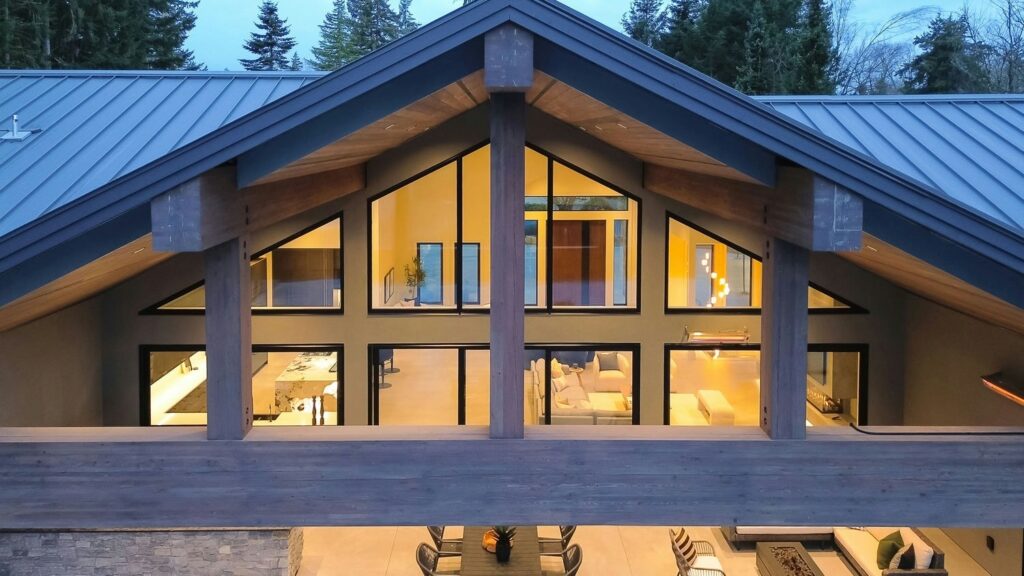
Vaulted ceilings change everything because they remove the attic buffer. You have less space for insulation, fewer places to hide mistakes, and more risk if air sealing and moisture strategy aren’t clear.
Vaulted roofs can absolutely work in the Lower Mainland. They just need intentional assembly selection and stronger documentation so every trade understands what must remain continuous.
Option 1: Vented Cathedral Roofs With A Continuous Vent Channel
A vented cathedral approach can work well when the roof geometry allows a continuous vent channel and the assembly has enough depth to keep that channel clear. In practical terms, it’s trying to provide a drying path above insulation while keeping indoor air out of the cavity.
The risk is discontinuity. If the vent channel gets crushed, blocked, or interrupted by framing and details, you lose the intended airflow. If the interior air barrier is leaky, the cavity can still get wet even with ventilation.
Option 2: Compact Or Unvented Roofs When Venting Isn’t Practical
Compact (unvented) roofs are often considered when venting paths are too complex or the architecture demands it. In these assemblies, the moisture strategy depends heavily on airtightness, insulation continuity, and a clear approach to vapour control and drying potential.
The biggest risk is ambiguity. If the drawings don’t clearly show the intended control layers, trades may build a hybrid of vented and unvented concepts. Hybrids can be risky because they can trap moisture without a clear drying path.
What Must Be Documented Before Trades Start
Vaulted assemblies need clear sections and details. Trades should not have to guess where air sealing happens, how penetrations are handled, or what must stay continuous at transitions.
The safest approach is to document the assembly intent in the permit set and in the construction set, then align sequencing so air sealing and key inspections happen before cavities get closed. A strong roof assembly is as much a process decision as it is a product decision.
Low-Slope And Flat Roof Assemblies For Modern West Coast Homes

Low-slope and flat rooflines can look clean and modern, and they can absolutely be part of a West Coast custom home. The key is to treat water management and detailing as the primary design problem, not an afterthought.
In the Lower Mainland, flat roof success comes from clear drainage design, robust edge and penetration detailing, and realistic maintenance planning. A low-slope roof that “mostly drains” is not a good fit for a wet climate.
Drainage First: Don’t Ask A Flat Roof To Behave Like A Pitched Roof
Low-slope roofs need deliberate drainage paths. That means you design where water goes, how it gets there, and what happens if primary drains clog. It’s not enough to assume water will find its way off the roof.
This is also where the “assembly” concept matters. Drainage details, overflow strategy, membrane continuity, and edge transitions are part of the assembly. If those are weak, no insulation or ventilation strategy will save the roof.
Condensation Risk In Low-Slope Roofs
Low-slope roofs often behave like compact assemblies. That increases the importance of airtightness and vapour strategy, because there’s usually less opportunity for accidental drying compared to a vented attic.
A low-slope roof can fail even when it never leaks, simply because indoor moisture finds its way into the assembly and condenses. That’s why the interior air barrier and detailing at penetrations are such a big deal.
Penetrations And Roof-Wall Transitions Are The Risk Zone
On low-slope roofs, penetrations and transitions do a lot of work. Drains, skylights, vents, and roof-to-wall transitions are common places for water to concentrate and for movement to occur over time.
Solar-ready thinking can also help here, even if you’re not installing solar. Fewer penetrations, grouped penetrations, and planned zones reduce leak risk and simplify future maintenance.
Thermal Performance And Moisture Risk: Insulation Choices Change The Assembly
Insulation is not just about energy. In a wet coastal climate, insulation choices change where surfaces get cold, where condensation can form, and how forgiving the roof is if small air leaks occur.
A roof assembly that targets higher performance can still be durable, but it usually demands better air sealing and clearer detailing. Better performance raises the bar for execution.
Why Continuous Insulation Helps Roofs In Coastal Climates
Continuous insulation can help reduce cold spots and thermal bridging, which can reduce localized condensation risk. It also tends to improve comfort because interior ceiling surfaces stay warmer.
From a practical standpoint, continuous insulation can simplify the thermal story, especially at transitions. When the thermal layer is clear and continuous, you’re less likely to end up with hidden weak points that behave like condensation magnets.
Where Thermal Bridges Hide In Roofs
Thermal bridges often show up at framing patterns, edges, and transitions where insulation gets interrupted. Skylight curbs, parapets, and roof-to-wall junctions are common examples where “good insulation overall” still leaves localized cold surfaces.
The issue isn’t that thermal bridging is new. It’s that roof assemblies in West Coast climates don’t have much tolerance for repeated cold, damp cycles at weak points. Those cycles are where moisture problems quietly accumulate.
Higher-Performance Roofs Need Better Air Sealing
As you improve thermal performance, the roof can become less forgiving of air leakage. Small leaks can deliver moisture to colder surfaces, and those surfaces may stay cold longer because the assembly is better insulated.
The solution is not to avoid performance. It’s to plan the control layers first, then pick materials and assemblies that keep those layers continuous. When airtightness is treated as a design deliverable, not just a jobsite task, higher-performance roofs become far more reliable.
The Details That Make Or Break West Coast Roofs
If you only remember one thing, make it this: roofs usually fail at details, not in the middle of a roof plane. Valleys, edges, penetrations, skylights, and roof-to-wall transitions are where water concentrates and where assemblies get complicated.
Good roof assemblies reduce complexity where possible, then document the unavoidable complexity so it’s built correctly.
Flashing Strategy At Valleys, Eaves, And Edge Conditions
Valleys and edges collect and move water. In heavy rain, they do it constantly. A durable assembly plans for water to move safely without relying on perfect conditions.
Edges matter because they’re exposed to wind-driven rain and movement. When an edge detail is weak, water can find its way behind layers that were never meant to get wet. That’s how small problems turn into chronic ones.
Skylights: Beautiful, But Detail-Driven
Skylights can bring great light, but they add joints, transitions, and water concentration points. In a wet climate, every additional joint increases the demand on detailing and inspection.
If you want skylights, plan them intentionally. Limit the number where possible, avoid placing them in the highest-risk zones, and make sure details and sequencing are clear. A skylight is not just a product choice. It’s an assembly choice.
Plumbing And Mechanical Penetrations: Fewer, Grouped, And Planned
Penetrations are inevitable, but scattershot penetrations are optional. Grouping penetrations and planning routes early reduces leak risk and makes roofing work cleaner.
It also supports future flexibility. A roof that’s already crowded with random penetrations is harder to maintain and harder to adapt, whether that adaptation is solar, ventilation upgrades, or future repairs.
Roof-To-Wall Transitions And Parapets
Roof-to-wall transitions see a combination of water exposure and movement. Parapets can be especially detail-driven because they create edges and intersections that must shed water reliably.
These details benefit from clear drawings and a simple question during review: “Where does water go, and what happens if it gets behind the first layer?” When the answer is clear in the details, the roof becomes much more durable.
Ventilation And Indoor Humidity: Roof Durability Is Also A Mechanical Story
Roof assemblies don’t live in isolation. Indoor humidity, ventilation design, and construction moisture all affect how much moisture pressure the roof sees. Even a well-designed assembly can struggle if the house routinely pushes large amounts of moist air into roof cavities.
This is why coordination matters. Your architect, mechanical designer, builder, and trades all influence roof durability, even if the roof detail itself looks perfect.
Airtightness Is A Moisture Strategy, Not Just An Energy Feature
Airtightness reduces the amount of indoor air that can migrate into roof assemblies. That matters because indoor air usually carries moisture, and moisture condensing in hidden places is a common cause of mould and rot.
In practice, airtightness succeeds when it’s planned and inspected. It fails when it’s treated as “someone will seal it later.” Roof assemblies that work in West Coast climates treat air sealing as a scoped deliverable with clear responsibility.
Balanced Ventilation And Exhausting Moisture To The Exterior
Bathrooms, kitchens, and laundry areas generate moisture. That moisture needs a path out of the home that does not involve the attic or roof cavities. The concept is simple: exhaust moist air to the exterior and avoid dumping it into unconditioned spaces.
You don’t need to design the ventilation system yourself. You do want to confirm the project includes a coherent ventilation plan, and that terminations are coordinated so exhaust air goes where it should.
Construction Moisture And Early Occupancy
New builds often contain moisture from concrete, framing, and finishes. If you move in quickly, the home can experience higher indoor humidity while materials dry out. That can increase moisture pressure on the roof assembly in the first season.
A good plan accounts for this reality. Proper ventilation, commissioning, and clear homeowner guidance during the first months can help the home dry safely without pushing moisture into hidden cavities.
Choosing The Right Roof Assembly: A Simple Decision Framework
Choosing a roof assembly isn’t about picking the fanciest option. It’s about matching the assembly to your roof geometry, ceiling design, performance targets, and appetite for maintenance and complexity.
Use this framework to keep the conversation practical, especially if you’re deciding between vented attics, vaulted ceilings, and modern low-slope features.
Step 1: Start With Your Architecture And Use Of Space
Start with what the home needs to be. Do you want a vented attic for simplicity and storage, or do you want vaulted ceilings for volume and light? Are you adding low-slope roof areas for modern design features or rooftop decks?
Your roof assembly should support the architecture without forcing the trades into improvisation. The more complex the roof geometry, the more important it becomes to choose an assembly that can be detailed and built consistently.
Step 2: Decide What You’re Optimizing For
Be honest about priorities. Some homeowners want maximum durability with proven details. Others want higher performance and are willing to invest in better detailing and inspection. Others want clean modern rooflines and accept that detailing needs to be more robust. Here’s a quick comparison:
| Assembly Type | Best For | Key Risks In A Wet Climate | What Must Be Done Right |
| Vented Attic | Pitched roofs with flat ceilings | Moist air leakage into attic, blocked vent paths | Airtight ceiling plane, correct exhaust routing, clear ventilation paths |
| Vented Cathedral | Vaulted ceilings with simple slopes | Vent channel discontinuity, air barrier gaps | Continuous vent channel, strong air sealing, careful transitions |
| Compact (Unvented) Roof | Complex roofs where venting is difficult | Trapped moisture if layers conflict | Clear control-layer strategy, excellent airtightness, documented details |
| Low-Slope Roof Assembly | Modern forms, small low-slope areas | Ponding at weak drainage, detail failures at edges | Drainage-first design, robust penetrations, realistic maintenance access |
Once priorities are clear, write them down. Your design brief should state what matters, such as “vaulted ceilings in main living,” “durable low-maintenance roof,” or “minimize penetrations and simplify drainage.” This keeps the roof assembly from drifting as the project moves from concept into coordination.
If you want a structure for turning performance goals into clear requirements your team can act on, use this guide: design brief for your custom home. A brief also helps avoid the most common roof problem: everyone assumes someone else is handling moisture risk.
Step 4: Confirm The QA Plan Before It’s Covered Up
A roof assembly can be “right” and still fail if quality control is weak. Once insulation and finishes go in, it becomes hard to see whether air sealing and continuity were done correctly.
Confirm the sequence: what gets inspected before cavities close, who signs off, and how issues get corrected. A clear QA plan reduces risk more than a marginal upgrade in materials.
What To Look For In Your Drawings And Permit Set
Homeowners don’t need to be building-science experts to spot missing roof assembly clarity. You just need to know what should be shown and what should be described.
The goal is to avoid “mystery assemblies,” where the roof looks fine on plan but the control layers are never clearly documented in sections and details.
Roof Plans Should Show Intent, Not Just Shape
A roof plan should do more than show slopes and ridges. It should also communicate intent around penetrations, drainage paths, and where complexity concentrates. If penetrations are scattered everywhere with no strategy, it’s a sign the assembly may be drifting toward higher risk.
Look for notes that indicate the assembly type and any critical constraints, like keeping certain zones clear or grouping penetrations. Those notes keep the roof build aligned when multiple trades are coordinating.
Sections And Details Are Where Assemblies Live
Roof assemblies are defined in sections and details. That’s where you see whether control layers are continuous at eaves, valleys, skylights, parapets, and roof-to-wall transitions.
Permit Documentation Varies, But Clarity Helps Everywhere
Municipal permit requirements vary, but clear documentation tends to reduce back-and-forth regardless of where you’re building. Even when permits don’t require every assembly detail, your project still benefits from a coherent set that trades can build from.
If you want to understand what a typical application includes at a high level, this overview of a building permit drawing set is a helpful companion.
Local Code And Bylaw Context Matters
Even within Greater Vancouver, requirements and expectations can differ by municipality, and certain design choices can trigger extra scrutiny or documentation. That’s why it helps to keep local context in mind when you’re choosing roof forms and detailing strategies.
For Vancouver-specific context that can influence design coordination, see: Vancouver building bylaw design considerations. Your team should confirm the project’s requirements based on the actual address and scope.
Common Roof Assembly Mistakes In The Lower Mainland
Most roof assembly failures in the Lower Mainland come from mixed strategies, unclear documentation, and missed sequencing. They don’t usually come from one “bad product.” They come from an assembly that had no single, coherent plan. Use this list as a quick check before you finalize rooflines, vaulted ceilings, skylights, or low-slope features.
Mixing Vented And Unvented Approaches Without A Clear Strategy
Hybrid roofs happen when parts of the roof act like a vented assembly and other parts act like a compact assembly, without clear transitions. That can create pockets where moisture enters but can’t dry.
If the roof changes type across the home, that’s not automatically wrong. It just needs explicit detailing so the drying and control-layer strategy stays consistent.
Skipping Air Sealing At The Ceiling Plane
Air sealing is easy to underestimate because you don’t see it once finishes are up. In vented attics, the ceiling plane is the critical line. In vaulted roofs, the interior lining and penetrations play a similar role.
If your drawings don’t show how penetrations get handled, or if the plan relies on “seal it later,” that’s a risk indicator. The best assemblies treat air sealing as a scoped, inspectable task.
Too Many Penetrations And Too Little Planning
Every penetration adds risk. It adds a flashing detail, an air sealing detail, and often a sequencing challenge. When penetrations are planned and grouped, they can be built cleanly. When they’re scattered, they increase leak risk and complicate future maintenance.
This is also where modern homes can get into trouble. Skylights, multiple exhaust points, and decorative rooflines are all possible, but they need stronger planning in a wet climate.
Underestimating Maintenance And Access
Maintenance is not a failure. It’s part of ownership. Roofs in the Lower Mainland will see debris, moss, and heavy rainfall. Designs that ignore maintenance access often become costly later.
Plan for realistic access and predictable debris zones. Keep drainage paths clear and avoid creating details that require constant attention to remain watertight.
How Versa Homes Designs Roof Assemblies That Hold Up Here
A roof assembly that works for West Coast climate is rarely “one magic product.” It’s a coordinated system that manages rain, controls air leakage, and stays serviceable over time. At Versa Homes, we bring that coordination into the design process early, then protect it through construction with fixed-price scope clarity, a detailed build schedule with pre-booked trades, and a client portal that keeps documentation, progress photos, and decisions organized as the project moves forward. If you want roof performance and detailing aligned from day one, start with our custom home architectural design team.
Frequently Asked Questions
What Is A Roof Assembly?
A roof assembly is the full roof system working together, including roofing, underlayment, flashing, ventilation strategy, insulation, air sealing, and vapour control. It’s designed to manage water and moisture while keeping the home comfortable.
What Roof Assembly Works Best For West Coast Climate?
The best assembly depends on your roof shape and ceiling design. Vented attics are often a durable default for pitched roofs with flat ceilings when detailed correctly. Vaulted and low-slope designs can also perform well, but they require clearer control-layer planning and documentation.
Is A Vented Attic Better Than A Compact Roof In Vancouver?
Often, yes, for simpler pitched roofs because it can be more forgiving and easier to inspect. Compact roofs can work well when venting isn’t practical, but they demand strong air sealing and a clear moisture strategy.
How Do You Prevent Condensation And Mould In Roof Assemblies?
Focus on airtightness, manage indoor humidity with proper ventilation, and ensure the assembly’s control layers are continuous and coordinated. Condensation risk usually increases when warm, moist indoor air can leak into cold parts of the roof.
Are Flat Roofs A Bad Idea In The Lower Mainland?
Not automatically. Low-slope roofs can work, but they must be designed around drainage, robust detailing at edges and penetrations, and realistic maintenance planning for a wet climate.
Do Vaulted Ceilings Increase Roof Moisture Risk?
They can, because there’s less room for insulation and ventilation, and fewer opportunities for drying if moisture gets into the assembly. The right assembly choice and clear detailing make the difference.
What Roof Details Cause The Most Leaks In Heavy Rain?
Penetrations, valleys, skylights, and roof-to-wall transitions are the most common risk zones, especially with wind-driven rain. Strong flashing and clear drainage paths matter more than almost any single material choice.
What Should I Look For In My Roof Drawings?
Look for assembly notes, a clear ventilation concept where relevant, a planned penetration strategy, and sections/details that show continuity at transitions like eaves, skylights, parapets, and roof-to-wall connections.

Felipe Freig
Founder of Versa Homes
Felipe Freig is the founder of Versa Homes, a Vancouver custom home builder known for architecturally driven, fixed-price projects. With years of hands-on site experience and deep permitting and by-law knowledge, Felipe leads high-performance teams that deliver precision craftsmanship, clear budgets, and on-schedule luxury homes.
You May Also Like...

The Final Touches: Explore Exquisite Finishing Details for Your Custom Home

Schematic Design Vs Design Development: What Custom Home Clients Need to Know
Fall Maintenance Guide: Raking Leaves and Lawn Aeration Tips


Discreet Handover and Move-In for a Custom Home: The Last Phase, Run Quietly

Safe Rooms and Panic Rooms: Design Considerations for Custom Homes



Windows and Glazing for an Oceanfront Home: Wind Pressure, Salt, and Hardware That Lasts
Staff Accommodations in Custom Home Design: Suites, Driver Rooms, and Duty Rooms