
Here’s the short version: you review architectural drawings in three passes. First, confirm the big picture and scope. Second, cross-check that sheets agree with each other. Third, look for buildability and budget traps that cause change orders. If you want builder-level clarity before you submit for permits or price the build, this is exactly what our architectural design team helps clients do.
Most costly mistakes are not “technical drafting errors.” They’re human errors. A door swing that kills a hallway. A window that looks great on an elevation but ruins privacy in the living room. A roof line that forces awkward ceilings everywhere.
This guide shows you a simple, practical way to review your drawings without being an architect. Your goal is not to “check the engineer’s work.” Your goal is to make sure the drawings reflect how you want to live, and that the set is coordinated enough to build without constant clarifications.
What Architectural Drawings Are And What They’re Not

Architectural drawings are a communication tool. They tell the City what you intend to build and tell your trades what to construct. When they’re clear and coordinated, your pricing is tighter, your permit process is smoother, and your site runs calmer.
They’re also not a magic shield. A drawing set won’t protect you from indecision, scope creep, or vague expectations. If the drawings don’t match your priorities, you can still build the “wrong” house very efficiently.
What A Drawing Set Should Communicate
A good set should communicate scope, dimensions, and intent. Scope means what is included and what is not. Dimensions mean you can measure a room and trust it. Intent means the drawings show the builder how the design is supposed to come together, not just what it looks like from 30 feet away.
If you have to guess what a note means, someone will guess wrong on site. That usually becomes your cost. Clear drawings protect your budget because they reduce ambiguity, and ambiguity is where change orders are born.
Your best signal is consistency. The plans, elevations, and sections should tell the same story. When they don’t, it’s not a “drawing issue.” It’s a coordination issue that becomes a construction issue.
What Homeowners Can Safely Review
You can review drawings effectively without technical training. Focus on what you’ll experience daily: layout, circulation, sightlines, storage, window placement, privacy, and how the exterior reads from the street. You can also check that the set is internally consistent, and that major elements are not missing.
You can also catch practical issues that professionals sometimes overlook because they’re not living in the house. Furniture clearances, where backpacks land, whether a pantry door blocks the fridge, whether the powder room opens directly to the dining table. Those details matter.
What you should not do is pretend you’re the engineer. Structural sizing, code specifics, and detailed performance compliance should be handled by qualified professionals. Your review is about clarity and alignment, not stamp-level technical compliance.
Start With The Cover Sheet And Drawing Index
Start with the boring pages. That’s where you find out whether you’re reviewing the right set, the latest revision, and the actual scope. If you skip this step, you can spend hours reviewing the wrong version and never know.
A disciplined review starts with document control. That sounds corporate. It is also how you avoid expensive mistakes.
Confirm You Have A Complete Set
Look at the drawing index and confirm the set includes the sheets you expect: site plan, floor plans, elevations, building sections, and key schedules. If the set is missing sections or schedules, your project is probably not ready for accurate pricing or a clean permit submission.
Also watch for “placeholder” language: TBD notes, missing window schedules, or “by others” sprinkled everywhere. Some of that is normal early in schematic design. It’s not normal when you’re trying to lock a permit set or a fixed price.
If you’re about to price the build, completeness matters. An incomplete set forces assumptions, and assumptions show up later as cost increases and timeline resets.
Check The Revision Block And Dates
Check the revision block and confirm the issue date. Then confirm everyone is working from that same version: your architect, builder, consultants, and any energy or structural team. One outdated PDF floating in an email chain can cause weeks of rework.
This is also the moment to confirm what the drawings are “for.” Are they schematic, design development, permit, or construction drawings. Each stage has a different level of detail, and you should judge the set based on the stage.
If the stage is unclear, ask for clarity before you review further. You’ll save yourself a lot of confusion and frustration.
The 3-Pass Method To Review Architectural Drawings

This is the fastest way to review without getting lost. Don’t try to “read everything” line by line. You’ll miss the big problems. Use three passes, and you’ll catch most issues that matter.
The first pass is for intent. The second pass is for coordination. The third pass is for buildability and budget reality.
Pass 1: Big Picture And Scope
In pass one, ask one question: “Is this the right house on this site, and is everything we think is included actually included?” Start with the site plan, then the floor plans, then a quick look at elevations.
You’re looking for scope gaps that commonly slip through: exterior stairs, landings, decks, retaining conditions, guard lines, fireplaces, skylights, and storage that exists only in your imagination. If you want a mudroom bench, confirm it’s drawn. If you want a pantry, confirm it’s sized and located the way you expect.
This is also where design phase context matters. If you’re in early design, you should be deciding overall flow and intent, not arguing about minor trim details. If you want a clear picture of what should be resolved in each stage, use this guide as a reference point.
Pass 2: Coordination Between Sheets
Pass two is where most “hidden” mistakes show up. You’re checking that the same element is represented consistently across plans, elevations, and sections. If the plan shows three windows on a wall, the elevation should also show three windows in the same positions. If the section shows a bulkhead or sloped ceiling, the plan should hint at it, not surprise you later.
Coordination problems often appear as small inconsistencies: window tags that don’t match, ceiling heights that change without explanation, roof lines that don’t align with interior spaces, or stair geometry that looks plausible on plan but collapses in section.
This is also why design development exists. It’s the phase where coordination tightens and drawings stop being “conceptual.” If you’re unsure whether your set is still schematic or already in design development, this breakdown helps.
Pass 3: Buildability And Budget Traps
Pass three is where you think like a builder. Not because you want to be one, but because you’re the one paying for complexity. A detail that’s hard to draw clearly is often hard to build cleanly.
Look for complexity that drives cost without improving your daily life. Overly complex roof geometry, too many unique window sizes, long cantilevers, awkward waterproofing transitions, and fussy exterior reveals all add labour and risk. Some are worth it. Many are not.
Also look for “missing decisions” disguised as design. If a drawing says “feature wall” but doesn’t define it, that’s a future change order. If the stair is drawn but headroom is unclear, that’s a future site problem. The goal is to make the unknowns smaller before you hit permits and construction.
How To Review The Most Important Sheets
Not all sheets are equal. Some sheets carry the most risk, and they tend to be the ones homeowners skim. Review the sheets in an order that matches real-world consequences.
You want to review the site and plans first because they drive everything else. Then elevations and sections, because they expose what plans can hide. Then schedules and notes, because that’s where the “truth” often lives.
Site Plan
The site plan is where good projects become buildable projects. Confirm orientation, driveway access, grading intent, outdoor living areas, and how the house sits relative to property lines. This is where setbacks and site constraints quietly force design choices.
Look for practical issues: does the entry stair land comfortably, or does it feel pinched. Does the driveway have a workable approach, or does it create awkward turning. Is there a clear strategy for water, downspouts, and where runoff goes, especially in a wet climate.
Site plans also hide future costs. If grading assumptions are vague, you can end up with expensive changes later. If you’re unsure about the real site constraints, pause and confirm before you lock the rest of the drawings.
Floor Plans
Floor plans are where you should spend the most time. Walk through the house mentally, room by room, and try to live a normal day. Where do shoes land. Where does mail land. Where do you carry groceries. Where do guests go when they arrive.
Pay attention to door swings, pinch points, and circulation. A plan can look “open concept” and still function badly if doors collide or hallways are too tight. If you can, print to scale or use a digital measuring tool so you can check clearances realistically.
This is also where you catch privacy issues early. If a powder room door opens directly to a dining view, you’ll regret it. Fixing it on paper is easy. Fixing it after framing is not.
Elevations
Elevations show how your house will actually read from the street and the yard. They also reveal window placement and proportions in a way plans do not. Check for window alignment, inconsistent head heights, and awkward exterior composition.
Now make it personal. Where are bedroom windows facing. What do you see from the living room. Can neighbours see into key spaces. If you’re planning floor-to-ceiling glass, confirm it still makes sense with privacy and furniture layout.
Elevations are also where roof form becomes real. If the roof looks complicated on elevation, it will be complicated on site. That can be fine, but it should be intentional, not accidental.
Building Sections
Sections catch what plans hide. They show ceiling heights, roof slopes, floor-to-floor heights, and how the house meets grade. If you only look at plans, you can miss the fact that a “vaulted ceiling” creates awkward low zones or bulkheads exactly where you wanted a clean line.
Use sections to confirm comfort. Do key rooms feel tall enough. Are windows placed to bring light deep into rooms. Is the stair headroom comfortable. Does the roof shape force strange interior ceilings in bedrooms or living areas.
Sections are also where build complexity shows up early. If waterproofing transitions or floor level changes look fussy, ask why. Complexity can be fine when it solves a real problem. It’s a waste when it’s just noise.
Schedules And Notes
Schedules and notes are where sets become buildable. Window schedules, door schedules, and general notes translate drawings into decisions. If tags don’t match between plan and schedule, you’re guaranteed a question later, and questions cost time.
Look for vague language. “Owner to select” is normal for finishes. It’s risky for structural or envelope elements that affect cost and timeline. Also watch for “typical” notes that aren’t actually typical. If something repeats, it should repeat consistently.
If you want to de-risk pricing, schedules are not optional. They’re the difference between a guess and a controlled scope.
A Simple Table To Spot Problems Fast
If you only have 15 minutes, use this triage approach. It won’t replace a full review, but it will catch the most common coordination and clarity problems.
You can also use it as your meeting agenda with your architect or builder. The fastest reviews happen when everyone looks at the same items in the same order.
Sheet Type, What To Verify, Common Red Flags
| Sheet Type | What To Verify | Common Red Flags |
| Site Plan | Access, grades, outdoor areas, stairs, drainage intent | Vague grading, unclear stairs, missing exterior scope |
| Floor Plans | Circulation, door swings, storage, furniture fit | Pinch points, door conflicts, missing storage, awkward adjacencies |
| Elevations | Window alignment, privacy, proportions, roof form | Inconsistent heads, neighbour sightlines, overly complex roof geometry |
| Sections | Ceiling heights, stair headroom, roof impacts, floor levels | Bulkheads everywhere, sloped ceilings in key rooms, unclear transitions |
| Schedules/Notes | Tags match plans, clear scope, defined intent | Mismatched tags, “TBD” everywhere, vague “feature” items |
Use this table to identify questions, then answer them before permits and pricing. A question that gets answered now is cheap. A question answered on site is expensive.
Align The Drawings To Your Design Brief
Drawings drift when the brief is vague. Or when the brief was clear, but no one checks the drawings against it. This is where homeowners have the most leverage, because you know what matters to you.
Your brief is not a formality. It’s the test you use to decide whether the drawings are actually solving the right problem.
Take your top priorities and check them against the drawings. If you said you need a real home office, confirm it has a door, daylight, and acoustic separation. If you said storage is a priority, confirm it’s drawn as built-ins, closets, and functional spaces, not “empty corners.”
Also check the “soft priorities” that turn into hard regret. Privacy, noise separation, mudroom flow, laundry placement, kitchen pantry logic, and outdoor connection. These are hard to “add later” without redesigning.
If you don’t have a clear brief yet, or your brief feels like a mood board, we outline how to write a design brief that actually guides decisions.
What A Builder Looks For When Reviewing Your Drawings
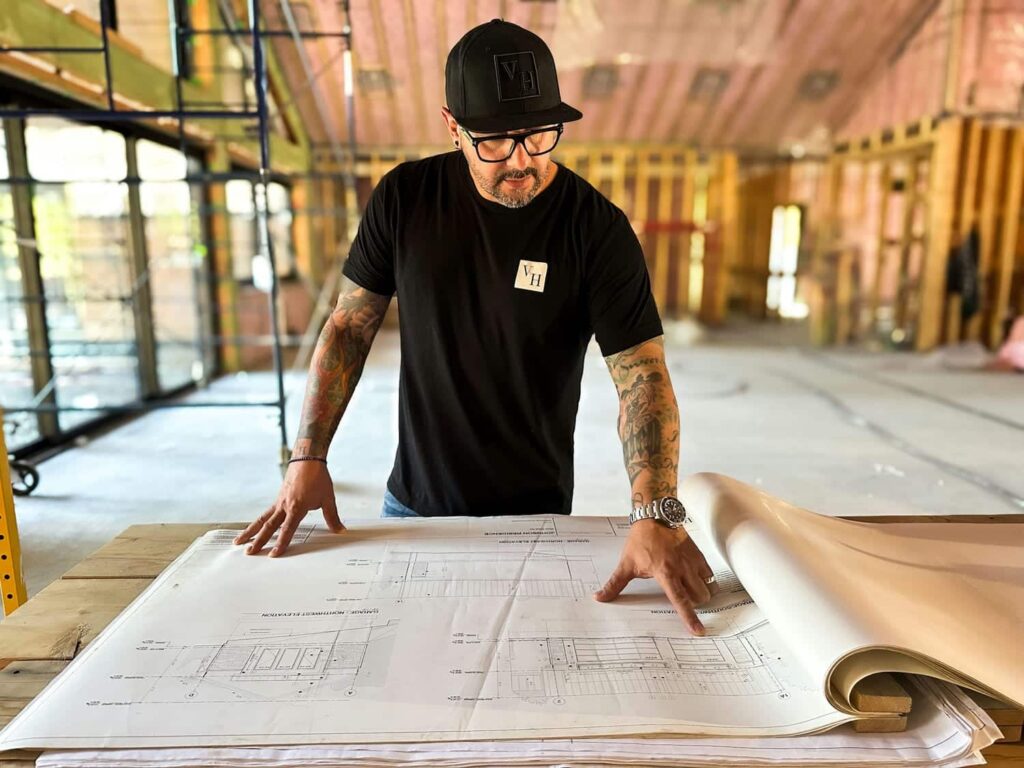
Builders read drawings differently. They’re not looking for whether the drawing looks nice. They’re looking for whether it can be built cleanly, priced accurately, and scheduled without chaos.
You want that mindset in the room early. It’s one of the simplest ways to reduce change orders and timeline surprises.
Clarity, Coordination, And Missing Scope
A builder scans for conflicts and gaps. Missing scope is the big one. Anything not clearly included becomes an assumption, and assumptions become disputes. Exterior stairs, guards, retaining work, waterproofing transitions, and site servicing are common “grey areas” if they’re not explicitly documented.
Builders also look for sequencing issues. If a design requires a complex detail that can’t be built until three trades are finished, that’s a risk. If a roof line creates awkward framing or waterproofing, that’s cost. This is why we treat the drawing set like a build plan, not just a design artifact.
Good builders also ask boring questions early. “Where does this drain go.” “How do we flash this.” “What is the finished grade here.” Boring questions prevent expensive surprises.
When A Complete Set Matters Most
A complete set matters most at two moments: pricing and permitting. If you price off incomplete drawings, you’ll get a softer number and more change orders later. If you submit incomplete drawings, you’ll likely get more review comments and resubmissions.
This doesn’t mean you need every finish selected to proceed. It means the structural intent, envelope approach, window strategy, and major scope items should be clearly documented. That’s how you avoid redesigning mid-permit or mid-build.
If you want to see what “complete” looks like for a municipal submission, this permit set breakdown is the deeper dive.
How Permitting Reinforces Why Coordination Matters
Permitting rewards clarity. Cities are not trying to make your life hard. They need a consistent set they can review efficiently. When drawings are coordinated, questions are fewer and approvals move faster.
When drawings are unclear, the City has one safe option: ask for clarification. That means more time, more back-and-forth, and more professional fees.
What Cities Expect From Submissions
Municipalities typically expect legible, consistent drawings that reflect the same design across every sheet. They also expect the submission to match the scope of the permit application. If the set feels like it’s still evolving, reviewers will treat it that way.
Even if you’re in Vancouver, their public information gives a useful sense of what a building permit process looks like at a high level. It’s a helpful sanity check on why complete drawings matter before you apply.
Your best move is to treat permitting as documentation of decisions you already made, not the place where you’re still deciding the design.
The Real Cost Of Re-Submissions
Resubmissions cost more than time. They cost coordination effort, consultant time, and momentum. Each cycle can also trigger new questions because one change affects multiple sheets, and now the set must be re-coordinated.
There’s also a behavioural cost. If you’re stuck in revision loops, people start making faster, less thoughtful decisions just to “get it done.” That’s how you end up with a house that technically passes, but doesn’t feel right.
A structured review before submission is the simplest way to reduce these loops. It’s not glamorous. It’s effective.
How Versa Homes Helps Clients Review And De-Risk Drawings
A drawing review should not feel like a casual look-over the night before a deadline. It should feel like a controlled checkpoint where you confirm key decisions, resolve coordination issues, and reduce the risk of expensive changes later.
That’s how you protect both the design and the build.
A Structured Review Process, Not A Casual Look-Over
We review drawings in stages aligned to the design timeline. Early on, we focus on layout, flow, and scope. As drawings mature, we shift to coordination, buildability, and clarity for pricing and permits. We use checklists and “known risk” areas so the review doesn’t depend on someone having a good memory that day.
We also coordinate consultant inputs so decisions don’t get made in silos. Structure, envelope, energy, and architectural intent need to agree, or you end up redesigning the same detail multiple times. Our goal is a one-pass submission mindset: decide once, document once.
This approach reduces backtracking. It also improves the quality of the final set, which makes your construction phase calmer.
How This Connects To Build Certainty
Clear drawings make fixed pricing and scheduling possible. Ambiguous drawings force allowances, contingencies, and schedule padding. That’s not how you want to build a custom home.
We support that clarity with a fixed-price contract model once scope is defined, a detailed build schedule with pre-booked trades, and a client portal with daily logs and progress photos so you can see what’s happening without chasing updates. Those systems only work when the drawings are coordinated and the scope is controlled.
In other words, the drawings are not just paper. They’re the foundation of a predictable build.
Work With A Team That’s Done It All
If you’re reviewing drawings and you want a second set of builder eyes before you lock permits or pricing, start with the team that treats design and construction as one system. We’ll help you confirm scope, catch coordination issues, and reduce the chances of expensive surprises later, all within a structured architectural design process.
Frequently Asked Questions
What’s The Best Way To Review Architectural Drawings If I’m Not An Expert?
Use a structured method instead of reading everything line by line. Start with completeness and revision control, then review in three passes: big picture and scope, coordination across sheets, and buildability/budget traps. Your goal is clarity and alignment, not technical engineering verification.
Which Sheets Should I Look At First In A Custom Home Drawing Set?
Start with the cover sheet and drawing index to confirm you have the right version. Then review the site plan and floor plans first, because they drive most downstream decisions. After that, move to elevations and sections to confirm the design works in 3D.
How Do I Catch Mismatches Between Floor Plans And Elevations?
Pick one wall and trace it across plan, elevation, and section. Confirm window counts, positions, and head heights match. If you find one mismatch, look for others, because coordination problems usually travel in groups.
What Drawing Issues Usually Cause The Biggest Change Orders?
Missing scope, vague notes, and late decisions are the big drivers. Common examples include exterior stairs and guards, waterproofing transitions, window changes after pricing, and unclear “feature” items that were never defined. The earlier you resolve these, the less they cost.
When Should I Review Drawings: Schematic, Design Development, Or Permit Set?
Review at all stages, but review different things. In schematic, focus on layout, flow, and major scope. In design development, focus on coordination and comfort (windows, ceilings, roof impacts). Before permits, focus on completeness, clarity, and consistency to avoid resubmissions.
How Do I Know If My Window Plan Makes Sense For Privacy And Comfort?
Check sightlines from inside the rooms you’ll actually use. Confirm where neighbouring windows face, and whether you’d need blinds down all day. If comfort or overheating is a concern, pay close attention to west and south exposures and whether the design includes real control.
Do I Need Printed Drawings To Review Properly, Or Are PDFs Enough?
PDFs are fine if you can zoom, measure, and compare sheets side-by-side. Printed sets help some homeowners “feel” scale and circulation more easily. The key is not the format, it’s whether you’re reviewing systematically.
What Questions Should I Ask My Architect Or Builder Before I Approve The Set?
Ask what stage the set is for, what is still undecided, and what assumptions are being made. Ask where risk is concentrated: complex details, missing scope, or permit sensitivities. Finally, ask what changes would be most expensive if discovered after permits or framing.

Felipe Freig
Founder of Versa Homes
Felipe Freig is the founder of Versa Homes, a Vancouver custom home builder known for architecturally driven, fixed-price projects. With years of hands-on site experience and deep permitting and by-law knowledge, Felipe leads high-performance teams that deliver precision craftsmanship, clear budgets, and on-schedule luxury homes.
You May Also Like...

Buying Waterfront Property in BC: The Natural Boundary, Erosion, Accretion, and the Survey You Actually Need

High-Performance Wall Assemblies For Step Code 4–5

How To Verify Builder Insurance And Warranty Coverage In BC

Understanding the Importance of Electrical Rough-In Before Insulation

Understanding the Difference: Custom Home v.s. Custom Estate


Starting with a Builder is Key to Staying Within Budget When Building

BC Energy Step Code: A Practical Guide for Custom Homes