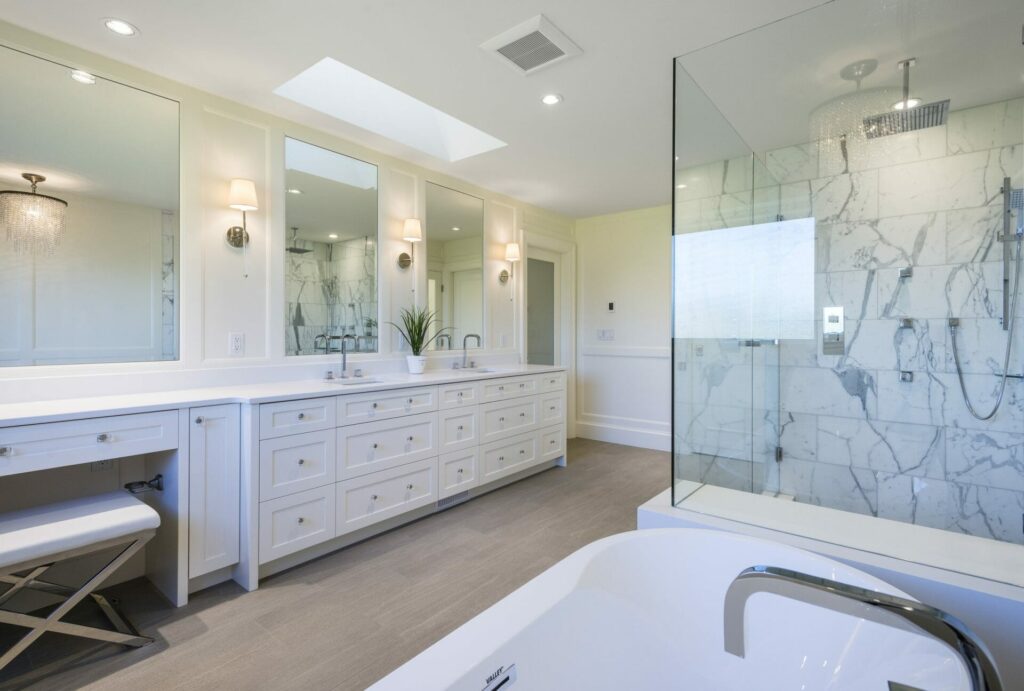
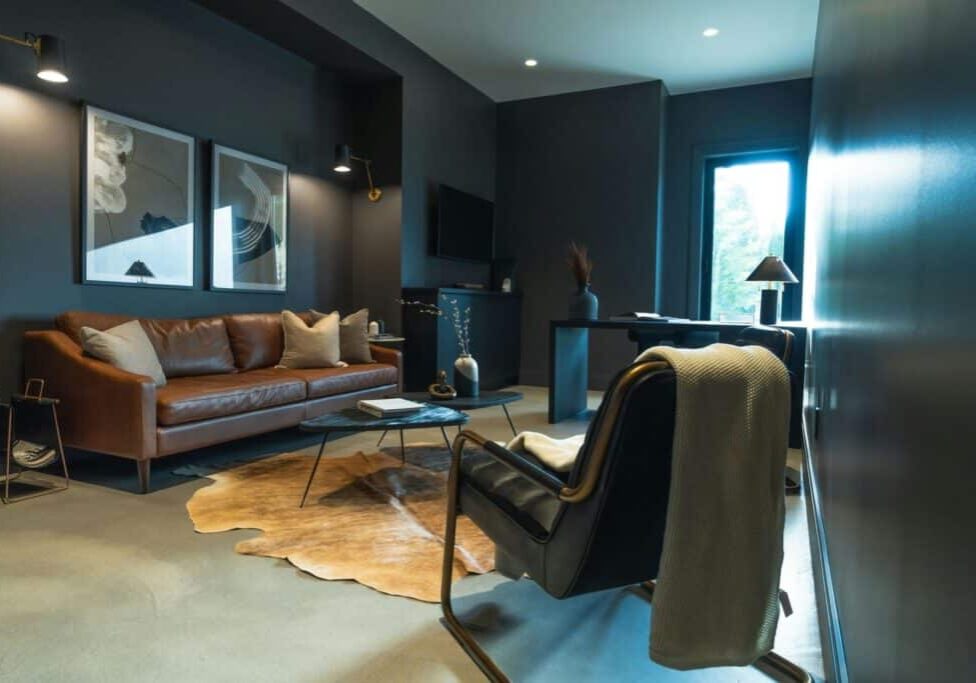
Executive home office soundproofing is not one product, one “acoustic wall,” or extra insulation added after the fact. It works best as a full room system: placement, walls, ceilings, floors, doors, glass, ducts, HVAC noise, penetrations, and flanking paths all need to be planned during custom home architectural design, before framing, rough-ins, and door packages are locked.
For founders, executives, and professionals taking confidential calls from home, the goal is not total silence. The goal is practical speech privacy, reduced background noise, and a room that supports focused work without feeling sealed off. For clients who treat confidentiality as a baseline rather than a feature, the office is typically planned as one room inside a broader private and discreet custom home build, where privacy is governed across the whole project rather than addressed one room at a time.
Soundproofing Decisions At A Glance
A quiet executive office starts with early decisions. If the office is already framed, ducted, wired, glazed, and drywalled, your options become more limited and more disruptive.
| Design Area | What To Decide Early | Why It Matters | Common Miss |
| Room Location | Place the office away from kitchens, media rooms, mechanical rooms, and busy circulation where possible | Good location reduces how hard the assemblies need to work | Picking the leftover room and trying to fix noise later |
| Wall Assembly | Decide mass, insulation, decoupling, drywall, and sealing strategy | Wall performance depends on the full assembly, not one product | Relying on insulation alone |
| Door And Seals | Choose a solid door, better frame, perimeter seals, and threshold strategy | Doors are often the largest sound leak | High-performing walls with a weak hollow-core door |
| Glass / Interior Windows | Decide whether glass is needed, where it sits, and how privacy is maintained | Glass can weaken speech privacy if treated as décor | Adding large glass beside confidential calls |
| Ceiling / Floor Paths | Check above, below, and adjacent spaces for flanking paths | Sound can move around treated walls | Ignoring floors, ceilings, joists, and stair openings |
| HVAC And Ducts | Plan quiet ventilation, duct routing, and equipment adjacency | Air still needs to move without creating noise paths | Routing ducts carelessly or placing the office beside equipment |
| Electrical / Penetrations | Plan outlet boxes, low-voltage, lighting, and media cabling carefully | Gaps and back-to-back boxes can undermine isolation | Too many penetrations on critical walls |
Use this as a design meeting checklist. The earlier these decisions are made, the easier they are to price, document, and protect during construction.
Start With The Floor Plan: The Quietest Room Is The One Placed Well
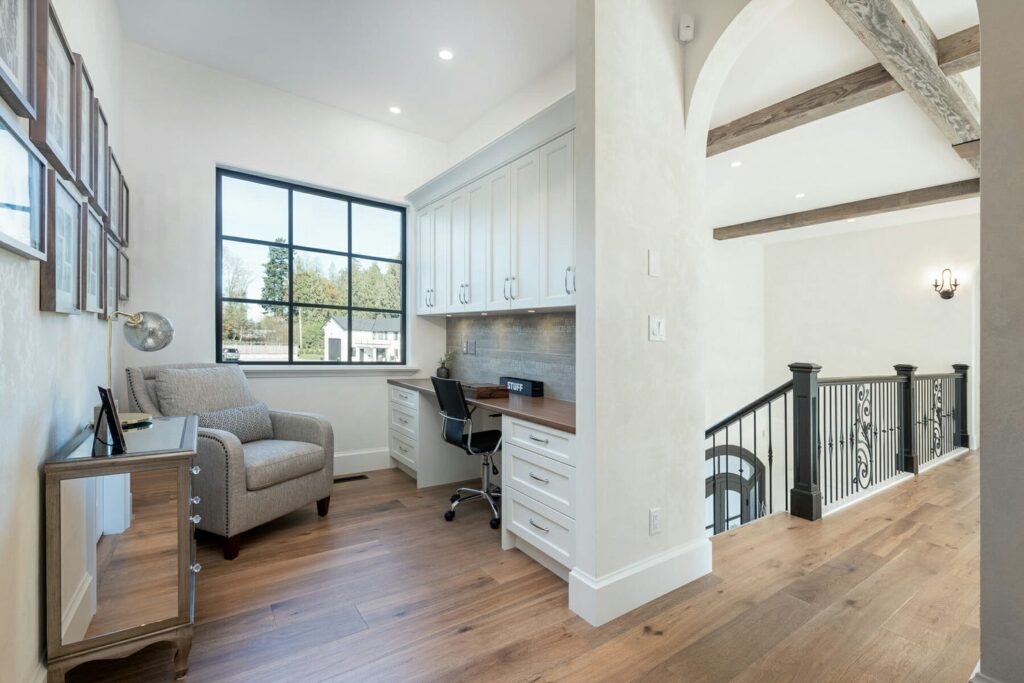
Room placement is the first acoustic decision. A well-placed office can meet a strong privacy goal without extreme construction. A poorly placed office may need expensive details just to overcome avoidable noise from family rooms, kitchens, mechanical rooms, stairs, or media spaces.
Put The Office Away From The Noise Before You Upgrade The Walls
The best executive office location is usually away from the busiest parts of the home. Kitchens, open family rooms, gyms, playrooms, laundry rooms, garages, mechanical rooms, and media spaces all create sound that can leak into an office or interrupt calls.
Placement also matters for privacy in the other direction. If you take confidential investor calls, legal meetings, or executive discussions, you may care as much about sound leaving the office as sound entering it. That is why the room should not simply be whatever space is left after the rest of the plan is arranged.
Think About Who Needs Privacy From Whom
Before choosing assemblies, define the privacy problem. Are you trying to keep household noise out of the office, keep your speech private from nearby rooms, stop video-call background noise, or reduce sound into bedrooms while you work late? These goals are related but not identical. A room can feel quieter inside while still allowing speech to be understood outside the door.
For an executive office, the brief should be specific. “Quiet enough for focused work” is different from “confidential calls should not be intelligible in the hall.” If the underlying concern is broader, such as keeping sensitive business activity off the radar of staff, visitors, or neighbours, the office brief should be developed alongside the rest of the discreet build strategy, not treated as a standalone room problem.
Treat Office Placement As A Floor Plan Decision
Executive office privacy belongs in early floor plan planning, not after the room is labelled “office.” The office should be placed with adjacency, door approach, view, daylight, background noise, and privacy zones in mind. If you are still shaping the home layout, this guide to building a strong floor plan gives helpful context for how room placement decisions affect daily life.
A good plan can create natural buffers. A closet wall, hallway, built-in storage zone, or secondary room can protect the office better than a wall upgrade alone.
Define The Acoustic Goal Before You Pick Materials
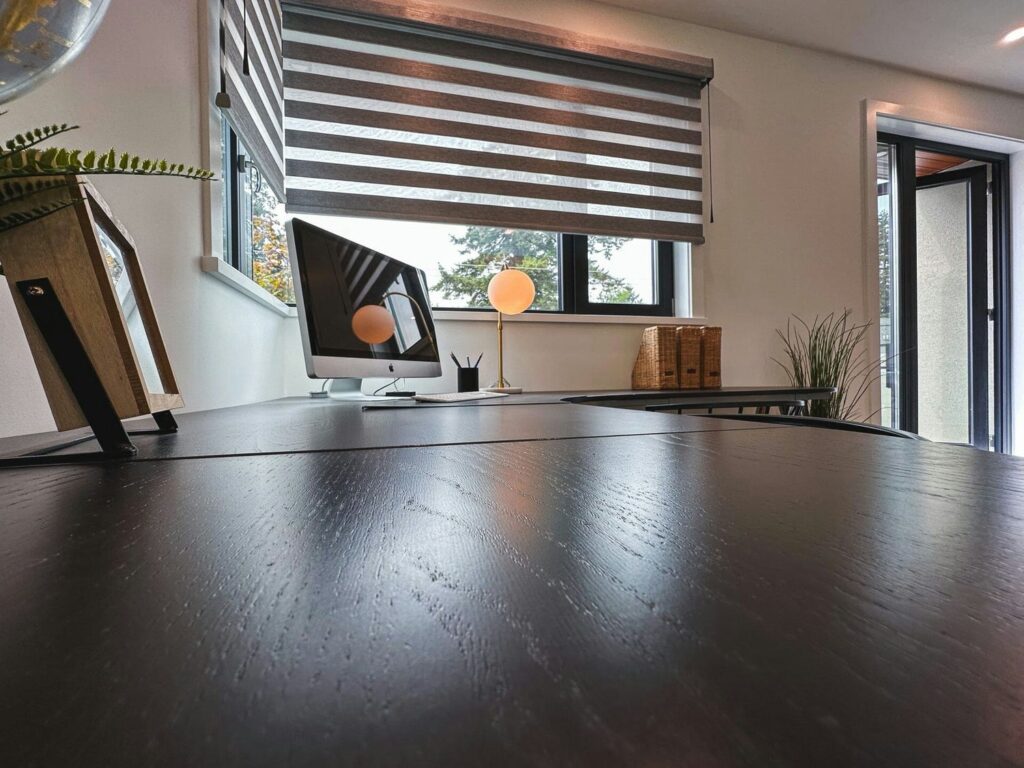
Many soundproofing mistakes start with vague language. “Make it quiet” can mean less distraction, reduced echo, better speech privacy, less mechanical noise, or better recording quality. Each goal points to different design choices.
“Quiet” And “Confidential” Are Different Goals
A room can be pleasant and quiet without being private. Soft finishes and area rugs can reduce echo inside the room, but they do not necessarily stop speech from travelling through a door, wall, duct, or ceiling path.
For an executive office, confidential work often needs a higher bar: speech that is difficult to understand outside the room, or a quieter environment for board calls, investor calls, legal work, or recorded presentations. That goal should be stated clearly. The design team can only protect the standard you name.
Write The Goal Into The Design Brief
Acoustic goals should be documented in the design brief, including which rooms the office should be protected from, whether the door is part of the performance target, whether glass is acceptable, and whether the goal is reduced distraction or stronger speech privacy. If you need a structure for capturing those priorities, use this design brief for your custom home before the drawings are finalized.
The right standard depends on what the office actually hosts. A founder taking quarterly investor calls cares most about door-to-hallway privacy and silent HVAC during the call window, so a strong door assembly and quiet duct routing may matter more than wall STC.
A physician or attorney handling confidential client conversations has a regulatory privacy obligation that pushes both wall and door assemblies higher, and may want speech leaving the room to be unintelligible rather than just quiet.
A podcaster or anyone recording from home cares less about speech leaking out and more about ambient noise getting in, which shifts emphasis toward background-noise control, mechanical silence, and reverberation inside the room.
Naming the use case keeps the design team from defaulting to a generic “quiet office” assembly that protects none of the priorities particularly well.
Some offices deserve professional acoustic input. Consider an acoustic consultant if the room supports confidential executive calls, legal or financial work, podcasting, recording, or sits beside a noisy room or mechanical space. For routine offices, a strong design brief, good room placement, an upgraded door strategy, and coordinated ventilation are usually enough.
STC Ratings: Useful, But Not The Whole Story
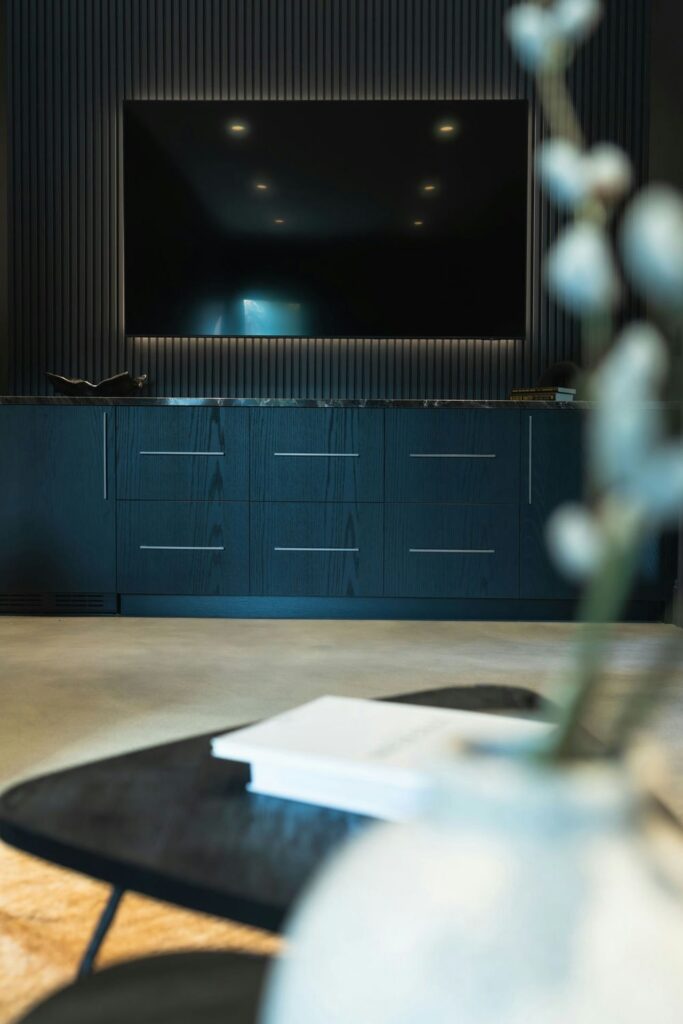

STC is a useful acoustic term, but it often gets misunderstood. It can help compare assemblies, but it does not guarantee that a complete room will feel private.
What STC Means And What To Aim For
STC stands for Sound Transmission Class. It is a single-number rating describing how much airborne sound a building assembly reduces through a direct sound path. The Vancouver Building By-law definition of STC describes it as a single-number rating of airborne sound attenuation for a building assembly separating adjoining spaces, based on the direct path of transmission.
For homeowners, the key phrase is “building assembly.” An STC rating might describe a wall assembly, but your office is not only a wall. It is a room with a door, glass, ceiling, floor, ducts, outlets, and gaps. A high-STC wall can underperform if any of those weaker paths are left untreated, which is why homeowners sometimes pay for a “better wall” and still hear speech outside the room.
As a rough orientation for an executive office: typical residential interior walls land around STC 30 to 35, where normal speech can usually be heard through the wall. Improved residential separations such as bedroom-to-office walls aim for roughly STC 40 to 45, where normal speech becomes difficult to understand but raised voices and clear consonants can still pass through.
Conference-room-grade speech privacy targets around STC 50, where confidential conversation is difficult to follow next door. STC 55 and above starts to approach genuinely confidential speech privacy, the range most relevant for executive calls, legal work, and recorded content. These numbers describe the wall assembly only. The full room result depends on the door, the glazing, the floor and ceiling paths, and how cleanly the gaps are sealed.
Code Minimums Are Not Executive Office Targets
Building code sound requirements often focus on required separations, such as between dwelling units or specific occupancies. A private executive office inside a single-family custom home may need an owner-defined performance goal that goes beyond minimum compliance. The Vancouver Building By-law’s sound transmission requirements show how code language treats specific assemblies and separations, but that does not automatically define the right target for confidential calls inside your home.
The right office target depends on adjacency, background noise, speech privacy needs, and how the room will be used.
How Each Part Of The Room Affects Privacy
Walls get most of the attention in soundproofing conversations, but the room is a system. The door, the glass, the floor and ceiling paths, and the HVAC routing all matter, and the weakest path usually controls the real-world result. Here is what each component does and the vocabulary worth knowing when discussing it with your design team.
Walls
Effective office walls combine four principles: mass (to reduce airborne sound transfer), decoupling (to reduce vibration passing through framing), absorption (to control resonance inside the cavity), and sealing (to close the gaps that let sound bypass the assembly). The assemblies worth knowing by name are resilient channels (metal channels that decouple drywall from the studs), double-stud or staggered-stud walls (two separate stud rows so vibration cannot pass directly through), and additional layers of dense drywall or mass-loaded vinyl to increase mass. Mineral wool batts inside the cavity handle the resonance side and are the standard choice for acoustic insulation.
A “better than standard” office wall combines two layers of drywall on resilient channels with mineral wool in the cavity. A high-performance wall steps up to a double-stud assembly with mineral wool in both cavities and two layers of drywall on the office side. These approaches must be shown in drawings and understood by the framing and drywall trades, not improvised in the field.
Doors And Thresholds
Doors are usually the weakest path on an office wall. A hollow-core door with gaps around the perimeter undermines an upgraded wall because sound takes the easier route. For a private office, the door should be discussed as an assembly: a solid-core or acoustic-rated door, a properly weighted frame, full-perimeter neoprene or compression gaskets around the head and jambs, and an automatic door bottom or acoustic threshold seal that closes the floor gap when the door shuts. STC-rated door assemblies (often in the 35 to 45 range) bundle these components into a tested unit and are worth considering when the wall around the door is being built to STC 45 or higher. Where the door opens matters too. A door facing a kitchen, stair, or high-traffic hall faces more noise pressure than one tucked into a quieter transition zone, and a short buffer hallway or vestibule can make a meaningful difference for higher-spec offices.
Glass And Interior Windows
Interior glass, sidelites, glazed doors, and office window walls look polished but create acoustic trade-offs. A large glazed area can reduce the benefit of upgraded wall assemblies if the glass system is not detailed for the privacy goal. Smaller glazed areas, careful placement, or a view-facing window may work better than a large interior glass wall facing a busy hall. Daylight supports focus, but not if it exposes confidential calls or creates distracting reflections during meetings. Glass also affects framing, door packages, wiring, and finish details, so a late-stage glazing change can create expensive conflicts. Coordinate glazing decisions alongside the wall and door strategy from the beginning rather than treating glass as a finish item.
Floors, Ceilings, And Flanking Paths
Sound does not only move through the wall you are looking at. It can travel around treated assemblies through floors, ceilings, joists, open stairs, hallways, and shared framing paths. An office below a bedroom, above a family room, or beside an open stair needs more careful planning than one buffered by closets or storage, and late-night calls or speakerphone use can become an issue for nearby rooms. The right approach depends on the floor/ceiling assembly and the privacy goal. Some homes need improved floor/ceiling details, others only need better placement and door control. Electrical and low-voltage penetrations matter here too: back-to-back outlet boxes on critical walls are a common miss, and scattered penetrations for screens, cameras, speakers, and lighting controls weaken isolation if they are not planned together.
HVAC And Ventilation
A quiet office still needs fresh air. The challenge is moving air without creating sound paths. Ductwork can carry sound between spaces if routing, register placement, and equipment adjacency are not considered. A direct duct path between the office and a noisy room reduces privacy even if the wall is upgraded. The standard tools for taming HVAC noise are internally lined ducts (acoustic insulation on the inside of the duct), inline duct silencers (purpose-built attenuators in the supply or return run), oversized low-velocity registers (which move the same volume of air more quietly), and flexible duct connectors at the equipment to break vibration paths. A separately ducted run to the office, rather than a shared branch with a noisier room, helps prevent cross-talk. Locating an executive office beside a mechanical room, laundry, or HRV/ERV unit makes sound control harder. Avoid the conflict in the floor plan if you can.
When To Lock In Soundproofing
Soundproofing decisions should be made early because they affect the floor plan, wall depth, doors, glass, HVAC, electrical, and cost. Schematic design is the right phase for placement and adjacency, when moving the office is still possible. Design development is where assemblies, door specifications, glazing decisions, HVAC routes, and electrical penetrations become buildable. Review the architectural design phases for where these decisions fit in the broader workflow, and if a consultant might be needed for high-stakes confidential or recording use, bring them in during design development, not later. Once construction begins, acoustic upgrades are still possible, but they become less efficient and more likely to create rework.
Executive Office Soundproofing Checklist

Use this checklist before the office is framed, then revisit it before rough-ins and drywall. Start with the first four items during schematic design, when room placement and adjacency are still flexible. Revisit the wall, door, HVAC, and penetration items during design development, before trades price the work. Review the checklist again before drywall. That is the last practical moment to catch missing backing, penetrations, duct conflicts, or unclear sealing details before the room starts to close in.
- Define the goal: reduced distraction, speech privacy, recording, or all three
- Choose an office location away from noisy rooms where possible
- Identify which walls, floors, ceilings, and doors matter most
- Decide whether glass is worth the privacy trade-off
- Choose a door and seal strategy before the door package is finalized
- Confirm wall assembly intent before framing
- Coordinate HVAC routing, registers, and equipment adjacency
- Plan electrical and low-voltage penetrations carefully
- Avoid back-to-back outlets on critical walls
- Document acoustic notes in drawings and specifications
- Confirm who owns each detail during construction
- Review the office before walls close, not after finishes are complete
Questions To Ask Your Builder About Office Soundproofing
Use these questions during pre-construction meetings, when assemblies, doors, and HVAC routes are still being decided. They keep the conversation specific and make it easier to compare answers if you are interviewing more than one builder. For a broader set of pre-build vetting questions, see questions to ask builder references before you sign.
- What STC rating are you specifying for the office walls, ceiling, and floor, and what assembly will you use to hit it?
- Is the office door an acoustic-rated assembly with perimeter seals and an automatic door bottom or threshold seal, or a standard solid-core door?
- Where is mechanical equipment located relative to the office, and what is being done in the duct run (lined ducts, silencers, low-velocity registers) to reduce noise?
- How are electrical and low-voltage penetrations on critical walls being handled, including back-to-back outlets?
- What does the floor or ceiling assembly look like if the office is below a bedroom or above a busy room?
- How will glazing, interior windows, or sidelites be detailed for the privacy goal?
- What inspections or checkpoints will happen before drywall closes the walls?
- If acoustic performance is value-engineered later, what is removed first and what is protected?
How Versa Homes Designs Private Executive Workspaces Early
Private executive workspaces perform best when sound goals are planned before framing, rough-ins, doors, glazing, and HVAC routes are finalized. If you are still working through general home office layout such as desk position, lighting, and storage, start with home office planning basics first, since this page is written for the next tier: clients who need the office to support confidential work, focused calls, and professional presence from home. Versa Homes helps you define those goals early, then coordinate the office with the floor plan, mechanical plan, door package, and construction details so privacy does not become a late-stage compromise.
For clients who need the office to fit into a broader privacy strategy (controlled jobsite access, governed communication, and discretion across the whole build), the executive office is one room within our private and discreet custom home builder service. We support that process with fixed-price contracts once scope is defined, a detailed build schedule with pre-booked trades, and a client portal with daily logs and progress photos so decisions stay documented. If you want an executive office that feels calm, private, and integrated into the home, start with our architectural design services.
Frequently Asked Questions
What Is The Best Way To Soundproof An Executive Home Office?
The best approach is to design the office as a full room system. That includes location, walls, doors, seals, glazing, floors, ceilings, HVAC routing, and penetrations. No single product solves everything. Real privacy comes from controlling the weakest paths before the room is built.
What STC Rating Do I Need For A Private Home Office?
It depends on the privacy goal and the rooms around the office. STC is useful for comparing assemblies, but the full room result also depends on doors, glass, ducts, gaps, and flanking paths. For executive calls, define the desired outcome first: reduced distraction, stronger speech privacy, recording quality, or all three.
Can I Soundproof A Home Office After Construction?
You can improve an existing office, but major gains are easier before framing, drywall, door packages, and mechanical routing are complete. After construction, the work is usually more limited and more disruptive. Post-construction fixes often focus on doors, seals, soft finishes, and limited wall or ceiling work. They may not match what could have been done during design.
Is A Solid-Core Door Enough For Office Soundproofing?
A solid-core door helps, but it is not enough by itself. The full door system also needs the right frame, seals, threshold strategy, and placement. A strong wall with a weak door will still underperform because sound follows the easiest path.
Do Glass Walls Work For A Soundproof Executive Office?
Glass can work if planned carefully, but large glazed areas can reduce privacy. The right choice depends on the office’s confidentiality needs, visual goals, and acoustic strategy. If confidential calls are common, glass should be reviewed early with the wall, door, and HVAC plan.
How Does HVAC Affect Home Office Soundproofing?
HVAC can create noise and sound paths through ducts, transfer grilles, equipment rooms, and register placement. A quiet office still needs fresh air, so the mechanical plan must support both comfort and privacy. The goal is quiet ventilation, not a sealed room that becomes uncomfortable during long calls.
Should I Hire An Acoustic Consultant?
Consider one if the office is used for confidential executive calls, recording, podcasting, legal or financial work, or if it sits near noisy rooms or equipment. For many homes, a strong design brief and coordinated details may be enough. If the office is mission-critical, ask about acoustic input early. It is more useful before the room is framed.
What Should Be Shown On Drawings For A Soundproof Office?
Drawings and specifications should show wall assembly intent, door and seal strategy, glazing choices, HVAC routing notes, penetration rules, and any acoustic priorities trades need to protect. If the office simply says “office” on the plan, the soundproofing goal is too easy to miss.


Felipe Freig
Founder of Versa Homes
Felipe Freig is the founder of Versa Homes, a Vancouver custom home builder known for architecturally driven, fixed-price projects. With years of hands-on site experience and deep permitting and by-law knowledge, Felipe leads high-performance teams that deliver precision craftsmanship, clear budgets, and on-schedule luxury homes.
You May Also Like...

What is the difference between cost plus and fixed price?
Embracing the Power of Technology in Your Custom Home

Planning Mechanical Systems For Luxury Estate Homes

Understanding the Difference: Custom Home v.s. Custom Estate
12 Unique Features to Include in Your Custom Home Build in 2025

The Best Luxury Roofing Options for B.C.: What to Choose for Coast, Mountains, and Everything Between

BCBC Part 9 Spatial Separation: A Guide For Custom Homes
How to Choose the Perfect Floor Plan for Your Family